
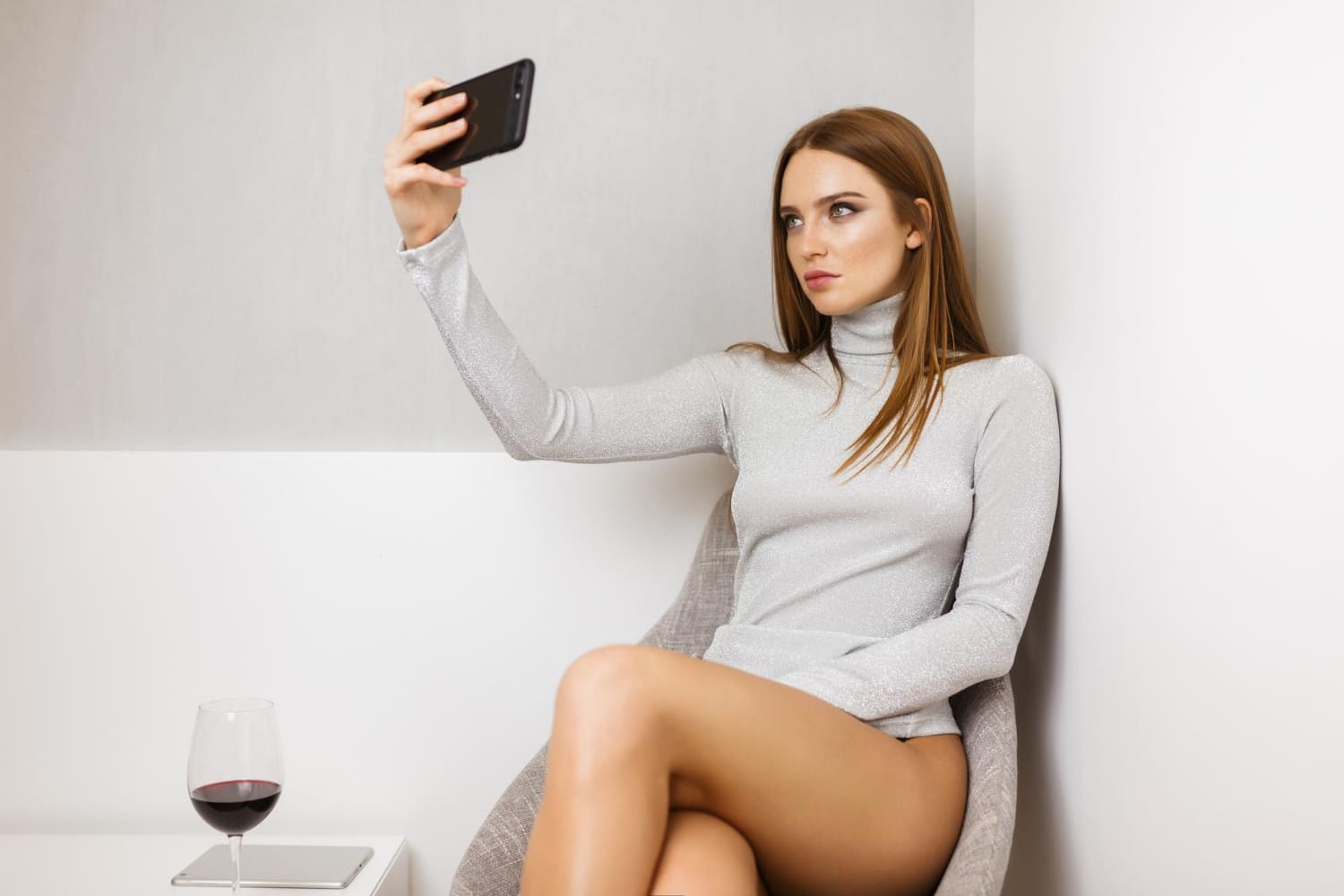
The technology of watching has changed more in the last fifteen years than in the previous fifty. Livestreaming, on-demand video, remote cameras, always-on connectivity – these have shifted the mechanics of observation into territory that older frameworks for exhibitionism and voyeurism don’t quite cover. The people being watched may be physically absent from the observer. The observer may be one person or an anonymous audience of thousands. The sense of access and intimacy can feel immediate even when the actual distance is enormous.
None of this makes the underlying psychological practice new. It changes the practical mechanics, the specific configurations available, and – most importantly – the specific ethical requirements the practice needs to respect.
Consensual digital observation and performance
The consensual version of the practice covers several distinct configurations that all involve technology mediating the observation.
Live camming is the most visible form. A performer streams to an audience, in real time, with two-way interaction typically through chat. The audience watches; the performer performs; the specific pleasure for both sides comes from the real-time interaction and the specific dynamic of being watched or watching in that moment.
Private video calls between partners cover a wide range of practice – from couples separated by distance keeping intimacy going, to specifically staged voyeuristic scenarios where one partner watches the other from a distance.
Controlled camera play involves cameras deliberately positioned in a physical space, with both parties knowing where and how observation is happening. This can be part of long-distance dynamics or part of in-person scenes where the specific dimension of being recorded or observed adds a layer to the experience.
Remote observation of everyday activities appears in some D/s dynamics – a submissive being observed during ordinary tasks, monitored on a schedule, or given specific tasks to perform on camera as part of an ongoing dynamic.
Each of these has its own specific psychology, and the specific arrangement produces specific effects that in-person observation doesn’t.
Tired of remote and want to remember what it feels like? Give us a call and book one of our fetish escorts – you’ll have trouble going back to digital. Date one of our girls and turn your fantasies into real roleplay sex!
Distance and intimacy at once
The distinctive feature of digital observation is producing distance and intimacy simultaneously.
The observer is not physically present. They can see, but they cannot reach, cannot touch, cannot physically enter the space of the observed person. This is a specific kind of distance that in-person observation doesn’t produce – the observer can be in another country, another time zone, entirely absent from the physical situation.
At the same time, the specific access is often more intimate than casual in-person observation would provide. The camera can be close. The framing can be specific. The environment can be curated. The observed person can be presented in ways that would require unusual proximity in physical space.
The result is a psychological configuration that older forms of observation didn’t quite offer: the observer knows they cannot cross the distance, and the observed knows the observer cannot reach them. This produces a specific kind of safety on both sides that changes what the observed party is willing to do and what the observer experiences.
Some practitioners describe this as more intense than in-person observation. Others find the physical distance reduces the charge. Both responses are legitimate; the mechanism is genuinely different from what happens when observation involves shared physical space.
The psychological appeal of asymmetrical visibility
Digital observation typically produces asymmetric visibility in specific ways.
The observed person is highly visible – often more visible than they would be in person, given the specific framing and camera positioning. The observer is often nearly invisible – a screen name, an anonymous face in a chat, or nothing at all beyond the knowledge that someone is watching.
This asymmetry is part of the psychological pull. Being seen while not seeing produces a specific state that mutual visibility doesn’t. The observed person is exposed; the observer’s own state is unknown. The tension of that specific configuration is what many practitioners are responding to.
For observers, the asymmetry produces its own state. Watching without being seen back removes the social feedback loop that ordinary interaction involves. The observer can respond however they want, and the observed doesn’t know. This freedom is part of the specific appeal.
Neither side of the asymmetry is inherently more comfortable. Both configurations produce specific psychological states, and different people are drawn to different sides depending on temperament, history, and what they’re seeking from the practice.
Consent, recording, storage, distribution
The single most important shift the digital form introduces is the specific ethical apparatus required to keep the practice bounded.
Recording is technically trivial. Any digital observation can be recorded, and the recording persists indefinitely. This is a fundamental difference from in-person observation, where the specific moment happens once and cannot be replayed. Consensual practice needs explicit agreement about what’s being recorded, by whom, and what happens to the recording afterward.
If you need us to, we can book you some of our hot filming escorts , with or without a mask. Your choice.
Storage is where recordings end up, and how secure that storage actually is. A recording made with consent for private use can end up in wider distribution if storage is compromised – through hacking, through the recording’s owner changing their mind, through devices being lost, through cloud services being breached. Serious practitioners think about this before starting, not after.
Distribution is what happens if the recording moves beyond the parties who agreed to it. The consent that covers being watched by one person does not cover being watched by a broader audience, and it does not cover being watched by future audiences the observed person has never met.
The unfortunate reality is that non-consensual distribution of intimate recordings is a common enough harm that any digital observation practice has to grapple with the risk. The two protections that actually work: not creating recordings unless absolutely necessary, and if recordings are created, keeping them under the observed party’s own physical control rather than distributed across services.
Being watched anonymously
The specific case of being watched by an anonymous audience – a livestream, an unnamed viewer, a group of people whose specific identities aren’t known – has particular psychological features.
For some practitioners, anonymity intensifies the experience. Being seen by unknown people produces a specific kind of exposure that being seen by known intimates doesn’t. The observers could be anyone; the observed party knows nothing about them; the specific tension of that unknowing is part of the appeal.
For others, anonymity reduces the sense of connection that makes observation meaningful. Being seen by a specific person you trust produces a different response than being seen by an anonymous crowd. Neither is more valid; they’re different practices with different appeals.
Camming, as a practice, tends to attract practitioners drawn to the anonymous version. Long-distance partner arrangements tend to attract practitioners drawn to the intimate-observer version. Different configurations for different psychological profiles.
Sometimes, anonymity means just wearing a mask. You can call us and book a mask escort – this way you can share the experience.
The line with covert observation
The specific harm this article does not endorse is non-consensual observation. This has to be said explicitly because the vocabulary of digital voyeurism can drift into it if practitioners aren’t careful.
Non-consensual observation includes:
- Hidden cameras in spaces where people expect privacy
- Screen recording of intimate content shared between partners without their agreement
- Distribution of recorded intimate material without ongoing consent
- Access to devices or accounts belonging to others without permission
- Any observation that the observed party did not agree to
These are serious harms. They’re also, in many jurisdictions, serious crimes. The specific technologies that enable consensual digital observation are the same technologies that enable non-consensual surveillance, and the line between the two is not preserved by technology; it’s preserved by the ethical practice of the people involved.
The consensual practice depends on maintaining this line rigorously. Practitioners who let the frame drift – who record without ongoing consent, who share what was shared with them, who use technology to access what they weren’t given – aren’t practising a slightly edgier version of consensual voyeurism. They’re causing specific harm to specific people, and the vocabulary of kink doesn’t excuse it.
The specific ethics of camming
Camming as a professional practice has developed its own ethical apparatus over time, worth naming.
Ethical camming involves performers who have agreed to be watched, in venues that maintain their control over what happens to the content, with viewers who have consented to the terms of the interaction. Payment structures reflect labour. Boundaries are respected. The specific interactions that happen are voluntary on both sides.
Unethical camming involves coercion, exploitation of performers who didn’t fully consent to their situation, unauthorised recording and distribution of streams, and the range of harms that any performance-industry can produce when the labour structure is bad.
For consumers of camming content, the specific ethical question is whether the practice they’re paying into is one where the performers are genuinely consenting participants. This is a question the consumer usually can’t fully answer, and the honest response is to prefer platforms and performers with visible accountability structures over those where the labour conditions are opaque.
The quiet part
Digital voyeurism, in the honest form of the practice, is one of the more genuinely modern kink configurations. The specific configurations of visibility, distance, and asymmetry that current technology enables didn’t fully exist before, and they produce psychological experiences that in-person practice cannot quite reach.
The consensual version depends on specific ethical care – around recording, storage, distribution, and the specific consent structures that make the practice work. Without that care, the technology that enables the consensual version enables specific serious harms.
Fetish practitioners who take both the specific pleasures and the specific ethics seriously are doing something worth doing. Those who treat digital observation as a lower-consequence version of physical observation, because the physical distance seems to reduce stakes, tend to produce harm they didn’t intend. The distance is real; the ethics are not looser for it.
Sources:
- Attwood, F., & Smith, C. (2014). Anti/pro/critical porn studies. Porn Studies, 1(1–2), 7–23. – reference on the changing landscape of consensual sexual content online.
- Bloom, T., & McDowell, J. (2018). Camming: Money, Power, and Pleasure in the Sex Work Industry. NYU Press. – reference on the professional practice of camming and its labour dimensions.
- Franks, M. A. (2017). Revenge porn reform: A view from the front lines. Florida Law Review, 69(5). – reference on non-consensual distribution of intimate content and its legal treatment.