
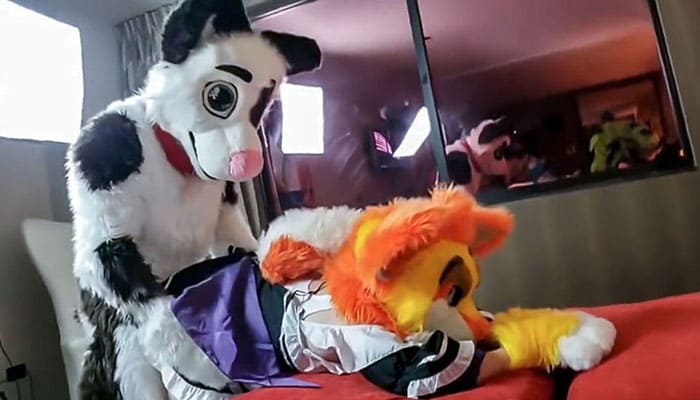
The tabloid framing of furries has been stuck on the same note for twenty years: adults in animal costumes, presumed to be doing something sexual with each other. It’s a lazy summary that mistakes the visible surface for the actual thing. The reality is more interesting and considerably more varied, and the interesting question isn’t whether the furry community is sexual – it’s how fandom, self-expression, character identity, and sexual interest can overlap without being identical.
Being a furry doesn’t automatically mean anything sexual. Being interested in furry themes sexually doesn’t require being part of the community. Understanding what actually goes on requires distinguishing several separate things.
The furry community isn’t one group
The first thing outsiders miss is that the furry community is genuinely heterogeneous. There’s a substantial fandom around anthropomorphic characters – animals with human-like intelligence, personality, and often physicality. Some fans are primarily interested in the art. Others are drawn to fiction. Others create characters (fursonas) that function as personal avatars. Others invest in fursuits – the elaborate costumes that make community events visually distinctive.
Within this loose collection, sexual interest exists as one component for some members and not for others. The community includes people whose interest is entirely non-sexual – collectors, artists, writers, cosplayers – and people whose interest is partly or entirely sexual. Both are legitimate participants in the same broad space.
Treating the whole community as fetishist erases the majority of it. Treating it as entirely non-sexual erases a significant subset. The accurate picture requires holding both facts at once.
The specific things that get conflated
Five distinct phenomena get bundled under the “furry” label:
Furry fandom. Interest in anthropomorphic characters in art, fiction, film, and animation. The kind of interest that produces conventions, art commissions, and dedicated online communities. Not intrinsically sexual.
Fursonas. Personal characters created by community members. A fursona is essentially an avatar – a specific animal, with a specific personality, appearance, and often backstory. The relationship between the person and their fursona varies enormously. Some treat it as roleplay. Others treat it as a form of self-expression. Others describe it as more central to their identity.
Anthropomorphic character interest. Attraction to characters that combine animal and human features. This can be aesthetic (drawn to specific designs), narrative (interested in stories featuring these characters), or sexual (finding the character type erotically compelling).
Fursuiting. Wearing elaborate costumes that embody a character, usually one’s own fursona. Suits range from head-only pieces to full-body constructions. The primary experience for most suiters is performance and community – being seen, interacting in character, participating in convention culture. Sexual suiting exists as a smaller subset with different practices.
Sexual attraction to anthropomorphic characters. The narrower category that actually corresponds to “furry fetishism” in a technical sense. Attraction to fictional characters or character types rather than to the fandom broadly.
These overlap in some people, don’t overlap in others, and shouldn’t be collapsed together.
The appeal of designing a character
One underappreciated element of the furry community is the specific pleasure of character creation. Designing a fursona – choosing the species, the colours, the personality, the backstory – is genuinely satisfying for many people in a way that’s separate from any sexual dimension.
The appeal parallels other forms of self-expression through fictional identity. Choosing a specific game character, developing a screen persona, curating an online presence with a specific visual identity. What furry culture provides is a particularly elaborated version, with community infrastructure for artistic collaboration, character development, and social interaction as the character.
For some people, the fursona is a way to explore aspects of themselves that ordinary social life doesn’t accommodate. Different confidence level. Different social role. Different physical embodiment. The character functions as a stepping-stone into behaviours or presentations that the person’s default identity would find difficult.
None of this requires a sexual component. But for a subset of the community, the character also functions as a sexual identity in ways that overlap with other forms of erotic fantasy.
Speaking of fantasy, give us a call and book a fantasy escort now!
Imagination and self-expression
The furry community sits at the intersection of several older traditions: costuming and cosplay, fan fiction and character-based writing, animation fandom, and internet-native identity formation. What makes it distinctive is the specific combination of these elements around anthropomorphic character concepts.
For many members, the primary appeal is imaginative. Creating and inhabiting a character. Making art or writing fiction featuring specific character types. Participating in shared world-building. This is essentially the same activity that produces fan communities around any specific media property, differentiated by the specific character convention (anthropomorphic animals) rather than by any specific franchise.
The self-expression angle is central. The community provides infrastructure – social, artistic, commercial – for people whose creative interests would otherwise struggle to find an audience. Illustrators can build careers. Writers can find readers. Suiters can develop physical performance skills. The economic ecosystem around furry creation is significant, and mostly not sexual.
Why outsiders misunderstand
The persistent misreading has specific sources.
Media coverage focuses on the visual outliers. Convention footage tends to feature the most elaborate suits and the most dramatic scenes, because they make for the best imagery. This produces a picture of the community that’s skewed toward its most visible members and away from its majority (who often don’t own suits, don’t attend conventions, and participate primarily online).
Some content is genuinely sexual, and it’s disproportionately visible online. Explicit furry art has a substantial community, and it shows up prominently in search results even for terms that weren’t looking for it. This creates the impression that sexual content dominates, when in fact it represents a specific subset of the community’s overall creative output.
Costume-based imagery is intrinsically strange to outsiders. The visual framing of adults in elaborate animal suits triggers assumptions about what’s happening under the surface. In fact, most suit use is performance-oriented, not sexual, and the physical realities of suits (heat, restricted vision, limited manoeuvrability) make them poor choices for sexual activity.
The community’s own vocabulary and practices are opaque to outsiders. Terminology, character concepts, and community norms take time to understand. Casual coverage tends to skip the learning and go straight to sensational summary.
Where sexual interest fits
For members of the community whose participation includes a sexual dimension, the specific interest varies significantly.
Some are attracted to specific character types (the specific animal, specific design features). Some are attracted to the concept of the character rather than any specific one. Some are drawn to roleplay scenarios involving characters. Some are interested in fursuit-mediated intimacy, though this is less common than outsiders assume and involves practical complications.
Sexual furry content overlaps with fan communities around related media – furry-adjacent characters in mainstream animation, video games featuring anthropomorphic characters, comics and novels featuring similar themes. The line between fandom of a specific character and attraction to a character type is not always sharp.
For people whose participation is entirely non-sexual, this dimension of the community is essentially invisible unless they choose to seek it out. The community has developed infrastructure to keep sexual and non-sexual content in separate spaces, though the separation is imperfect.
If you need a partner, give us a call and book one of our roleplay escorts for the evening. Make sure you specify your expectations, so the date is perfect.
Reducing the community to fetishism is wrong
The most common outside framing – furries are a sexual subculture – misdescribes the actual composition of the community. Estimates from community surveys and academic research suggest that while sexual interest is present, it doesn’t define membership.
Substantial portions of the community describe themselves as participating for non-sexual reasons: art, community, character exploration, convention culture, creative expression. Reducing the whole thing to a fetish erases these members and their reasons for participation.
The more accurate framing: a large fandom around anthropomorphic characters, with a range of individual participation styles, some of which include sexual interest and most of which don’t. The community’s own self-understanding matches this framing better than the mainstream shorthand does.
Online visibility and niche identity
The furry community is a specific case of a broader phenomenon: internet-native communities that give niche identities enough infrastructure to develop into recognisable subcultures. Before the internet, most furries would have been isolated fans of anthropomorphic characters, unaware that others shared the specific combination of interests. The community as it now exists – with conventions, economies, terminology, and internal culture – is a product of online organisation making previously scattered individuals findable to each other.
This is worth noting because it suggests the community will continue to evolve as new members join and existing members age. The specific combination of features that defines current furry culture may look different in fifteen years, in the same way it looks different from what it was fifteen years ago. What stays constant is the specific interest in anthropomorphic characters as an organising principle.
Furries are one of the most persistently misread modern subcultures. The reasons are structural: the community is visually distinctive, it includes sexual content that’s easy to find, and outsiders find the whole concept unfamiliar enough to invite lazy summary.
The actual picture requires more nuance than the summary provides. Fandom is not fetishism. Character creation is not sexual identity. Costume performance is not intimate practice. All of these can overlap in specific individuals, but treating them as identical produces both bad coverage and bad understanding.
For the people inside it, the community is what fandoms usually are: a specific set of interests, a specific set of practices, a specific set of people who share them. The particular character convention happens to be anthropomorphic animals rather than superheroes or spaceships or specific fictional universes. Everything else follows from that specificity.
Sources:
Plante, C. N., Reysen, S., Roberts, S. E., & Gerbasi, K. C. (2016). FurScience! A Summary of Five Years of Research from the International Anthropomorphic Research Project. – the reference collection of peer-reviewed research on furry community demographics, interests, and psychological profiles.
Reysen, S., Plante, C. N., Roberts, S. E., & Gerbasi, K. C. (2015). Optimal distinctiveness needs are satisfied by group membership. Journal of Research in Personality, 59, 82–89. – on the identity function of specialised online communities.
Bering, J. (2013). Perv: The Sexual Deviant in All of Us. Farrar, Straus and Giroux. – accessible overview including material on fantasy-based sexual interests.