

Hair is one of those features that carries a lot of weight without doing anything obviously sexual. It’s not reproductive anatomy. It doesn’t produce sensory signals in any strong hormonal sense. It’s just there, growing on people’s heads, sometimes on their bodies, doing its ordinary job. And yet fascination with it goes back as far as recorded human culture. Long hair has been sexualised. Short hair has been sexualised. Specific colours have been sexualised. Specific styles have been sexualised. Hair pulling has its own established place in erotic literature going back centuries.
For adults who identify hair as an area of attention, the interest tends to be layered. Some of it is aesthetic. Some of it is sensory. Some of it is symbolic. Most of the time, the person doing the noticing couldn’t fully explain what it is they respond to without a fair amount of thought, and even then only partially.
The visual signal
Hair broadcasts information constantly. Health, age, self-care, subcultural affiliation, sometimes profession, sometimes political leaning, sometimes religious identity. Every hairstyle is a statement whether the wearer means it that way or not. Long, short, cropped, dyed, natural, dreadlocked, straightened, curled. Each carries associations that observers read automatically.
For fetish-attentive observers, these associations become part of the response. Long hair often reads as feminine in cultures where that association holds, and men who respond strongly to long hair are often responding partly to what it signals rather than only to the hair itself. Cropped hair on a woman reads differently, and the observers who respond to it are often responding to a different set of associations.
The colour question deserves brief mention. Preferences for particular hair colours are common enough to be reflected in the entire beauty industry. Blondes, brunettes, redheads, and every shade within each category have their own following, and the reasons for the preferences are usually a mix of aesthetic response and accumulated cultural association. Whatever the source, the preferences are real, and adults who develop them aren’t being shallow. They’re responding to what they respond to.

Long hair specifically
Long hair carries particular weight across many cultures because it takes time and care to produce. Somebody with long, well-kept hair has been maintaining it for years. That fact reads as a kind of investment, and observers pick up on that investment whether or not they’re thinking about it consciously.
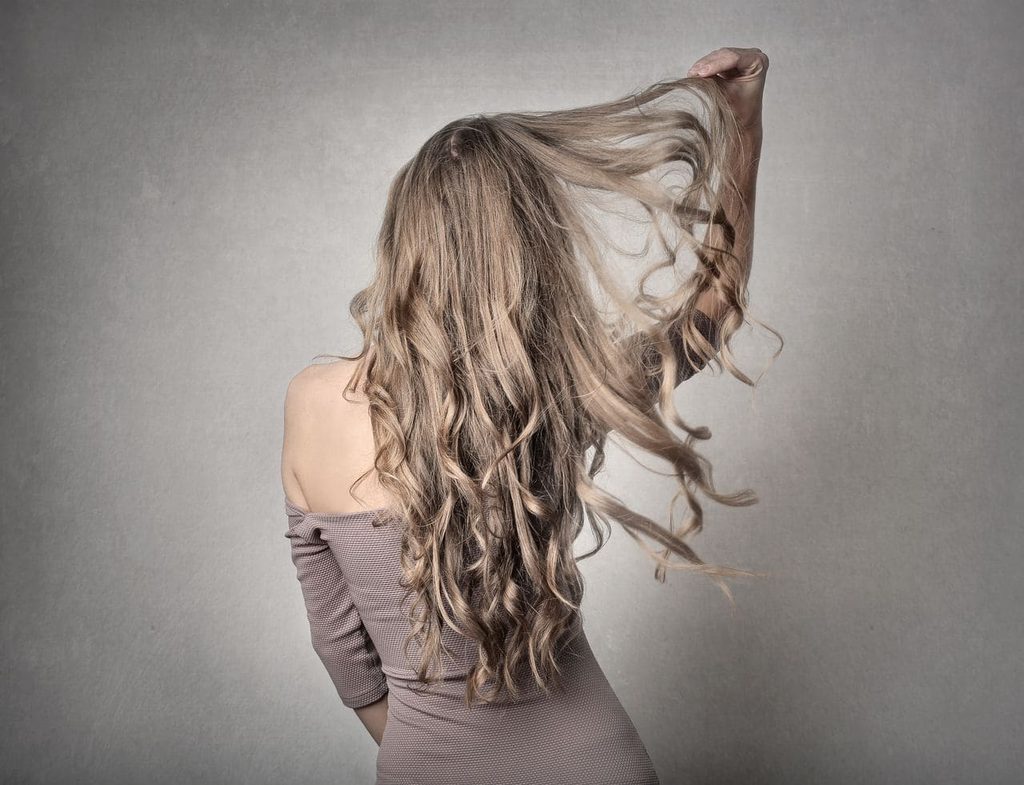
For adults with long-hair-focused attention, the appeal often includes the way long hair moves. Falls. Catches light. Frames the face and neck. Responds to wind or motion. There’s a quality of visual interest that long hair produces that shorter hair doesn’t quite replicate, and observers who respond to it often develop detailed attention to the way particular hair moves on particular people.
Long hair also does specific things during intimate encounters. Falls across skin. Gets pushed back. Provides something to hold onto. All of this feeds into why hair-focused sexual attention often clusters around longer hair specifically, though plenty of variations exist.
Texture and smell
Sensory dimensions of hair get less attention in most conversations about hair-related attraction, but they matter for adults with fetish-level interest.
Texture is a whole area of preference. Fine or thick. Straight or curly. Smooth or coarse. The way hair feels when touched, run through fingers, pressed against skin. Adults with tactile-focused attention often develop preferences that are as specific as any visual preference.
Smell matters more than most conversations acknowledge. Hair carries scent, both from the person’s natural chemistry and from whatever products they use. For observers whose attention includes olfactory dimensions, the scent of a partner’s hair becomes part of the erotic content. Adults report responding strongly to the smell of a particular shampoo on a particular person, or to the unwashed smell of a partner’s hair after a warm afternoon. Neither of these is unusual, and both point at how much sensory information hair carries.
Movement
Watching somebody’s hair move is one of the more overlooked sources of visual interest. Ordinary walking. Wind. The way it falls when the person tilts their head. The way it shifts when they laugh. All of these are constant micro-events that observers watch without necessarily noticing they’re watching.
For hair-focused observers, the movement is often more compelling than static appearance. A hairstyle that looks striking in a photograph might have less appeal in motion. A style that seems ordinary in a photograph might come alive when the person turns their head. The whole appeal is dynamic rather than fixed, which is one reason it doesn’t translate well to still imagery.
Grooming as intimate ritual
Watching somebody groom their hair is one of the more common sources of quiet erotic content that doesn’t get much cultural discussion. Brushing. Washing. Drying. Styling. Each of these is a private ritual that happens in most people’s lives and is rarely observed by anyone else.
For couples, the observation of these rituals often becomes part of intimate life. Watching a partner brush their hair in the morning. Being present when they wash it. Occasionally helping with any of these. All of this constitutes a kind of shared intimacy that doesn’t need to be discussed for both parties to know it’s happening.
Adults with hair-focused attention often describe grooming observation as one of the most reliable low-key pleasures of long-term partnership. What outside observers might treat as mundane maintenance becomes something more like a private show that only intimate partners get to see.
Hair worship
Hair worship as a practice within body worship dynamics has its own particular texture. Hands running through hair. Slow deliberate attention to it. Kissing it. Smelling it. Braiding or unbraiding it. Any of these can be organised into extended focused attention that treats the hair itself as significant.
The receiving partner often reports the practice as unusually relaxing. Hair-focused attention activates sensory responses that generalised touch doesn’t quite reach. Scalp sensitivity is significant enough that hair play produces measurable relaxation effects for many people, which is part of why ASMR content focused on hair brushing has become a genuine subgenre.
For the offering partner, hair worship provides a channel for expressing appreciation that doesn’t require anything obviously sexual. This makes it useful for couples wanting extended intimate connection without goal-directed sexual arc. Attention as its own point rather than as prelude.
While we don’t offer hair fetish services, we can book you a date with a body worship escort. Most of the ladies have long hair and are into fetishes, so you get what you wish for.
Hair pulling in consensual contexts
Hair pulling within consensual adult sexual practice is common enough to appear in prevalence surveys with meaningful frequency. Not as a fetish for most people who report it, but as one of many forms of physical intensity that couples build into their intimate life.
The psychology involves the combination of intimacy and controlled aggression. Hair is fully attached to somebody’s head, which means pulling it creates a kind of physical connection that other forms of grip don’t produce. The receiving partner feels the pull in their scalp and, indirectly, in the rest of their head and neck. The offering partner has a kind of physical control that other holds don’t quite match.
Within BDSM-inflected practice, hair pulling can function as one of the tools of dominance play. Outside of formal BDSM contexts, it appears as part of ordinary intense sexual practice for many couples who wouldn’t identify with kink communities. The distribution across the general adult population is wide, and the meaning of the practice varies with the couple.
Want to be mistreated? Call us and book a domination escort for the evening!
Consent architecture matters as it does with any intensity-focused practice. Between partners who’ve agreed to include it, hair pulling is a well-established variation. Applied without consent, it’s assault. The intensity of the physical experience makes this a practice where explicit agreement matters more than casual assumption.
Wigs and the transformation dimension
Wigs occupy a place in fetish territory that deserves brief mention. Some observers respond strongly to wigs as objects independent of the hair they’re mimicking. Others respond to the transformation wigs allow, which lets a partner appear as a substantially different person for the duration of an encounter.
The transformation dimension links to broader roleplay dynamics. A partner adopting a wig can adopt a whole different visual identity, and couples who enjoy roleplay often use hair changes as part of the vocabulary. Different wig, different character, different psychological space to inhabit for the evening.
Wig-focused attention has its own community and its own established practices. Like most niche fetish territory, the community is smaller than more mainstream categories but well-organised online for practitioners who want it.
Maybe this falls under the roleplay category, so call and book a roleplay escort for tonight!
Cultural loading
Hair has always been culturally loaded in ways that feed how it functions as a fetish object.
Religious traditions across many cultures have strict rules about hair covering, hair cutting, and hair display. Political movements have used hair as an identity marker for centuries. Beauty standards in different eras have prescribed particular hair looks that dominated aesthetic norms for generations. Rebellion has been signalled through hair repeatedly throughout modern history.
All of this cultural weight is part of what makes hair a compelling fetish object. Fetishisation of hair often connects to cultural associations. Long hair as feminine ideal. Short hair as transgressive. Particular colours as signifiers of particular subcultures. Adults developing preferences in this territory are usually responding partly to what the hair signals culturally, even if they haven’t articulated the signalling explicitly.
Where interest crosses into fetish
The line between finding hair attractive and having a hair fetish isn’t crisp. Indicators of the crossing include noticing hair consistently before other features of new people, developing detailed preferences about texture or movement or scent, having fantasy life that returns to hair-focused imagery, and finding that a partner’s hair carries central rather than incidental weight in the attraction.
None of these marks the interest as unusual. Hair-focused attention is one of the more common non-mainstream sexual patterns. Quieter than the flashier categories that get more coverage, largely because hair isn’t sexualised in mainstream discourse the way genitals or breasts or butts are, but present in a substantial fraction of the adult population.
For adults who identify with hair-focused attention, the practical value is knowing what actually matters to you visually and sensorially. Which changes what you notice about partners, what you appreciate consciously, and what you might build into intimate life more deliberately. Fetish self-knowledge, at its most useful, is accurate description of preferences that were already there.
You can read our older article on hair fetish here.
Sources
- Scorolli, C., Ghirlanda, S., Enquist, M., Zattoni, S., & Jannini, E. A. (2007). Relative prevalence of different fetishes. International Journal of Impotence Research, 19(4), 432-437. https://pubmed.ncbi.nlm.nih.gov/17304160/
- Joyal, C. C., & Carpentier, J. (2017). The prevalence of paraphilic interests and behaviors in the general population. Journal of Sex Research, 54(2), 161-171. https://pubmed.ncbi.nlm.nih.gov/26241201/
- Steele, V. (1996). Fetish: Fashion, Sex and Power. Oxford University Press.
- Poerio, G. L., Blakey, E., Hostler, T. J., & Veltri, T. (2018). More than a feeling: Autonomous sensory meridian response (ASMR) is characterized by reliable changes in affect and physiology. PLOS ONE, 13(6), e0196645. https://journals.plos.org/plosone/article?id=10.1371/journal.pone.0196645
- Bering, J. (2013). Perv: The Sexual Deviant in All of Us. Farrar, Straus and Giroux.
- featured image: Pornpics.com.