
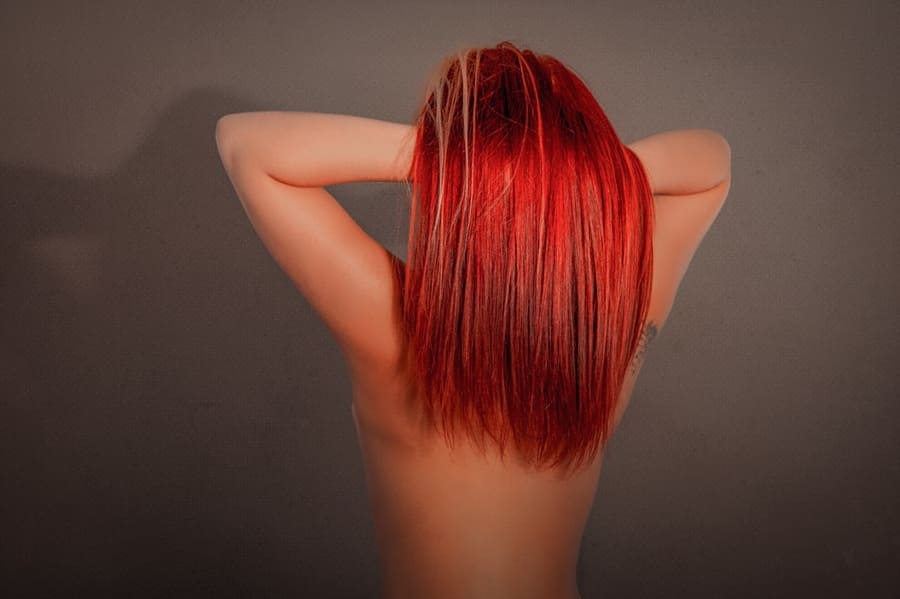
There’s a version of this conversation that gets awkward fast – someone mentions hair pulling in a sexual context and the room either goes quiet or someone makes a joke. Neither response is particularly useful. Hair is one of the most common erotic triggers in the kink community, it has a well-developed practice around it, and it deserves a more honest treatment than it usually gets.
So. Hair fetishes, hair bondage, hair pulling. Let’s talk about them properly.
What a hair fetish actually is
Almost everyone has preferences about hair. A particular colour, a specific length, the way someone wears it. That’s normal attraction, not a fetish – and the distinction matters.
A hair fetish is erotic arousal specifically triggered by hair. Not just finding long hair attractive. Actually aroused by it, in a way that the hair itself – rather than the person it’s attached to – is doing significant psychological work. The clinical term for attraction to head hair specifically is trichophilia. It has company: pogonophilia covers beards, pubephilia covers pubic hair, and a general preference for body hair has its own category. The taxonomy is more developed than most people realise.
Why do these fetishes exist? Probably because hair is one of the most culturally loaded physical attributes we have. Social expectations about hair – length, style, presence or absence on various parts of the body – are tied tightly to gender, religion, identity, and status. Fetishes tend to develop around exactly these kinds of charged cultural expectations, either reinforcing them or subverting them. The fact that masculinity is culturally associated with body hair and femininity with its absence gives the hair fetish enormous erotic potential in both directions.
If you find yourself genuinely aroused by a specific hair-related trigger – not just appreciating it aesthetically, but actually turned on by it – that’s a hair fetish. It’s common, it’s manageable, and it’s considerably easier to explore than most kinks because almost everyone has hair.
Hair play: the entry point
The gentlest end of hair fetish exploration is simply incorporating hair into intimacy deliberately. Running fingers through a partner’s hair. Stroking it. Brushing it slowly. These aren’t dramatic BDSM practices – they’re accessible, pleasant, and for someone with a genuine hair fetish, genuinely satisfying.
The dynamic can run in both directions. A submissive partner brushing and caring for a dominant’s hair is an act of service – intimate, attentive, and loaded with the power dynamic that makes BDSM rewarding. A dominant partner playing with a submissive’s hair establishes physical proximity and control without anything more forceful. Both versions work. The direction depends on the people involved and what the dynamic calls for.
One thing that applies before any of this starts: consent. Hair sensitivity varies a lot between individuals. Some people find even gentle touching of their hair uncomfortable or overstimulating. Ask first. It takes ten seconds and removes the risk of starting a session badly.
Hair pulling: more technical than it looks
Hair pulling has a primal quality to it – the immediate physical control it establishes, the instinctive nature of the act. In kink contexts it’s popular precisely because it feels unmediated. Direct. Animalistic, if that’s the register the session is going for.
It’s also more technically specific than it appears from the outside.
The key is distribution of force. Grabbing a small clump of hair and pulling hard is how you cause unintended injury – scalp damage, hair loss, genuine pain of the wrong kind. Grabbing a large handful at the nape of the neck or the crown, close to the root, and pulling evenly distributes the force across a much larger area. The sensation is intense without the risk of damage.
Practical specifics worth knowing: pull from the nape and crown, not the sides or front where the scalp is more sensitive and the hair typically finer. Check in beforehand about injury, sensitivity, and hair health – brittle or thinning hair changes the risk profile significantly. Uncontrolled pulling without attention to technique causes scalp injuries that nobody in the room agreed to.
As with everything in the BDSM toolkit, the question isn’t whether hair pulling is dangerous – it’s whether the risks are understood and managed. RACK applies here as much as anywhere else.
Hair bondage: the more structured end
Hair bondage is where the hair fetish intersects with the broader bondage and restraint practice – and it’s considerably more specialised than hair play or pulling.
The basic principle: rope attached to the hair creates a restraint that forces the submissive to hold a specific head position. Movement becomes uncomfortable or impossible without pain. Combined with other bondage, it produces a predicament dynamic – the submissive is caught between positions, each one carrying its own consequence. It’s psychologically intense in ways that straightforward physical restraint sometimes isn’t.
Technical requirements are more demanding here than in simpler hair play. Always use substantial amounts of hair – thin restraints concentrate force in ways that cause damage. Anchor the rope primarily at the nape and the crown parting, where force distributes most evenly. Never suspend anyone by their hair – the risk of serious scalp injury is real and the outcome is not the kind of intensity anyone is looking for.
Keep scissors accessible. Standard practice in any bondage context, but worth stating specifically for hair bondage because rope can tighten in ways that make untying difficult under pressure. Cut the rope, not the hair – but have the option available.
Hair bondage works with long hair most naturally, but some techniques apply to shorter hair as well. The learning curve is steeper than it looks. Watching experienced riggers work, or attending a workshop where the techniques are demonstrated properly, is genuinely worth the time before attempting more complex configurations. Pre-treating hair with hairspray helps rope grip better if slippage is a problem.
When it works well – the submissive fixed in position, head held at a specific angle, the rope taut and the dynamic fully established – hair bondage produces a quality of control and vulnerability that’s difficult to achieve through other means.
The Practical Conversations Worth Having
Hair fetishes are, relative to many kinks, logistically straightforward. Almost everyone has hair. Wigs extend the options considerably for partners whose natural hair doesn’t match the specific trigger. Growing, cutting, colouring, and styling are all temporary – low-stakes experiments compared to the investment some fetishes require.
The complications are social rather than practical. Asking a partner to grow or cut or style their hair specifically to satisfy a fetish requires a conversation that some people find uncomfortable. The honest approach is the only useful one: explain what the fetish involves, what specifically is arousing about it, and what you’re hoping to explore. A partner who understands the request is better positioned to engage with it than one who’s been given a vague instruction without context.
What you can’t do is expect a partner to maintain a specific hair configuration indefinitely as a standing requirement. People change their hair. They have autonomy over their own bodies. The fetish needs to be managed within that reality – which might mean exploring it with someone else on occasion, or using extensions and wigs as flexible alternatives.
Royal Escorts London fields companions who are experienced across the full spectrum of hair-related kink – from hair play within a broader session to more structured hair bondage incorporated into a BDSM dynamic. For clients whose hair fetish is specific enough that finding a willing and informed partner through conventional routes is difficult, a professional companion who understands the practice is the practical solution.
The fetish itself is common, manageable, and genuinely enriching when explored with the right person. Hair is everywhere. The practice around it is more developed than most people realise.