

Why underwear feels different
Most clothing lives in public view. Shirts, jackets, shoes, coats, all part of what a person shows the world. Underwear operates in a different register. It sits closest to the body, it is normally hidden, and it usually belongs to a set of daily rituals that nobody outside the person’s private life ever sees. This is part of why underwear carries a psychological weight that outer clothing rarely does.
Fetish attention frequently attaches to objects that combine intimacy and concealment, and few objects combine them more directly than panties. For some kinksters, the interest is entirely visual and centred on how a particular garment looks on a particular body. For others, it runs on the material itself, on the cut, on the colour, on the scent of a garment that has been worn, or on the imagined life of a garment belonging to a specific person. For others still, panties are part of a much larger fantasy involving roleplay, transformation, dominance, or gender expression.
The panty fetish category is broader than the name suggests, and two panty fetishists can turn out to be attracted to entirely different elements of the same object. That diversity is the point rather than a complication.
The difference between liking lingerie and having a panty fetish
Finding underwear attractive is common. A large portion of people respond visually to attractive lingerie, appreciate the aesthetic dimension of well-chosen underwear on a partner, and would happily count lingerie as a positive feature of intimate life. That is not, by itself, a fetish.
Speaking of fetish, how about some action tonight? Call us and book one of our fetish escorts tonight!
The distinction is one of centrality rather than of any sharp threshold. When underwear becomes the recurring focus of fantasy rather than one element of a broader attraction, when the presence or absence of particular garments meaningfully changes the intensity of response, and when attention keeps returning to underwear independent of the person wearing it, the interest is closer to a fetish in the sense the sexology literature uses the term. Nothing about the distinction is diagnostic. Nobody needs to sort themselves into a category to enjoy their own preferences.
Fabric, when the material matters as much as the garment
Material preferences sit near the centre of the panty fetish for a substantial fraction of men.
Silk and satin carry associations with smoothness, gloss, luxury, and the way fabric catches light and moves with the body. For men oriented toward this end of the range, the material transforms an ordinary garment into something visually and tactilely distinctive. Vintage lingerie traditions built substantial cultural imagery around silk specifically, and that imagery still shapes how the material reads in intimate contexts.
Lace and sheer materials are different. Transparency creates the paradox of a covering that reveals almost everything it covers. The pattern of lace, the contrast between fabric and skin visible through it, and the visual detail of the weave all contribute to a response that is more about looking than about touching. Many panty fetishists find lace one of the most compelling material categories.
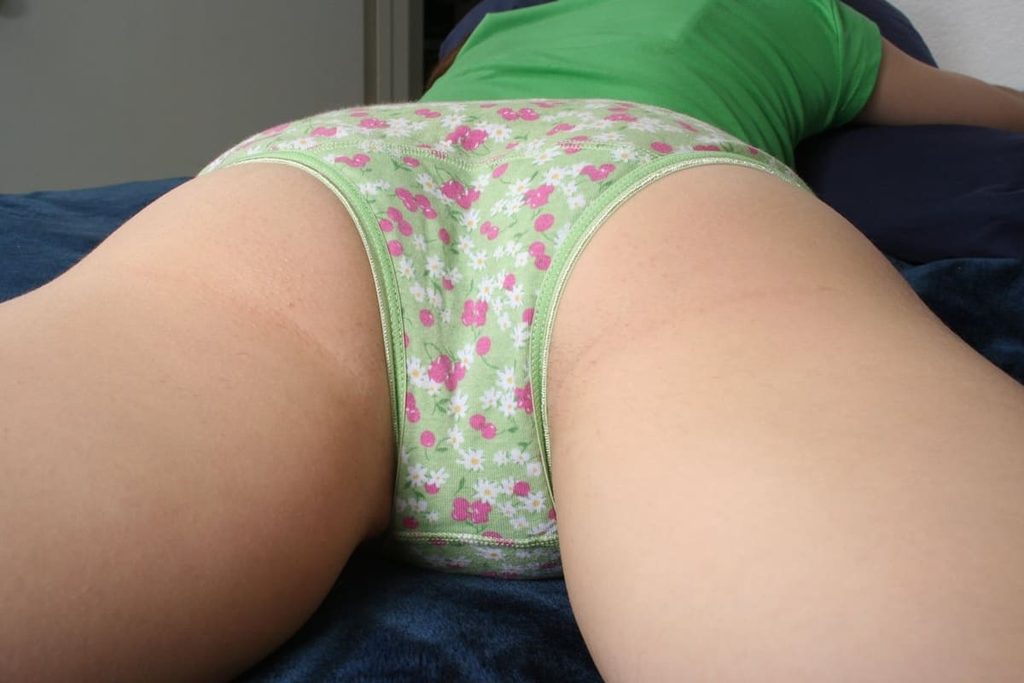
Cotton and everyday underwear deserve their own paragraph because they run against the assumption that fetish attention always aims at the elaborate. For many kinksters, ordinary cotton underwear carries more erotic weight than any elaborate lingerie could. The appeal is often about realism. Ordinary underwear feels like something a person actually wears, not something staged for viewing. That domesticity is exactly what makes it compelling for men whose attention runs on the personal and the familiar rather than the theatrical.
Cut, shape and presentation
Preferences within the fetish become highly specific quickly. Someone with an interest in panties often has a preference for a particular cut, a particular silhouette, a particular era of design, or a particular way the garment frames the body.
Briefs, thongs, boyshorts, high-waisted styles, high-leg cuts, vintage designs. Each produces a different visual reading and a different set of cultural associations. Panty fetishists oriented toward high-waisted vintage cuts are often responding to a completely different set of stimuli than men oriented toward contemporary low-rise thongs. Both are legitimate configurations of the interest, and neither maps onto the other.
Why apparently small design differences can transform the appeal of a garment is a question the general fetish literature keeps returning to without ever fully answering. What can be said is that developed attention becomes detailed rather than staying broad, and that the specifics tend to matter more the longer someone has been attending to their own interest in a category.
Colour and its meaning
Colour preferences within the panty fetish tend to be strong and durable, and men often have a clear sense of what they respond to.
Black, red, white, pastels, brights, prints, patterns. Each carries some general cultural association that mainstream commentary loves to reduce to a single meaning. Red is passion, white is innocence, black is power, and so on. That reduction is too simple to describe how colour actually works for real people. Individual preferences depend on personal memory, fashion associations, contrast with skin tone, the outfit surrounding the garment, and any number of other factors that don’t reduce to a symbolic dictionary.
For one man, a colour may carry cultural weight. For another, the same colour may be connected to a particular memory, a particular partner, or simply a visual preference that isn’t reducible to any external meaning. The interesting question is what any given colour does for the specific person responding to it rather than what colours are supposed to mean in general.

The boundary between private and public
Underwear is designed to remain hidden. That basic fact does a substantial amount of psychological work.
The tension between what is visible in ordinary daily life and what remains concealed underneath is one of the reasons the panty fetish carries the charge it does. Someone dressed in ordinary clothing is carrying an intimate garment beneath that clothing that nobody around them can see. The awareness of what is present but concealed produces a kind of small ongoing anticipation that runs quietly under everyday interaction.
For panty fetishists, the psychology of hidden intimacy is central. The garment is present in a public setting without being publicly visible. Both the wearer and any partner aware of what is being worn share a small piece of private information that the rest of the room does not have. Panty fetishists find it as one of the more consistent sources of intimate pleasure in long-term relationships, precisely because it operates quietly through ordinary days rather than requiring specific staged moments.
Revelation and removal
The transition between dressed and undressed carries its own psychological weight, and panties often occupy a particular position in that transition as one of the final layers before full nudity.
The ritual of undressing, the gradual movement from public to private, the specific moment when the last garment is removed or shifted, all of these can become sites of intense attention. What is compelling is often not the endpoint but the movement toward it. Undressing that goes too quickly loses this dimension. Undressing that is drawn out over time preserves it.
For fetishists that are mostly about anticipation, the moment before is often more charged than the moment itself. Panties positioned as the final barrier between concealment and exposure become the focus of that anticipation, and the specific way they are removed, or displayed, or partially adjusted can carry more erotic weight than what follows.
Pantyhose, stockings and layering
The panty fetish overlaps naturally with pantyhose fetishism, stockings fetishism, and the broader interest in lingerie layering, without being reducible to any of them.
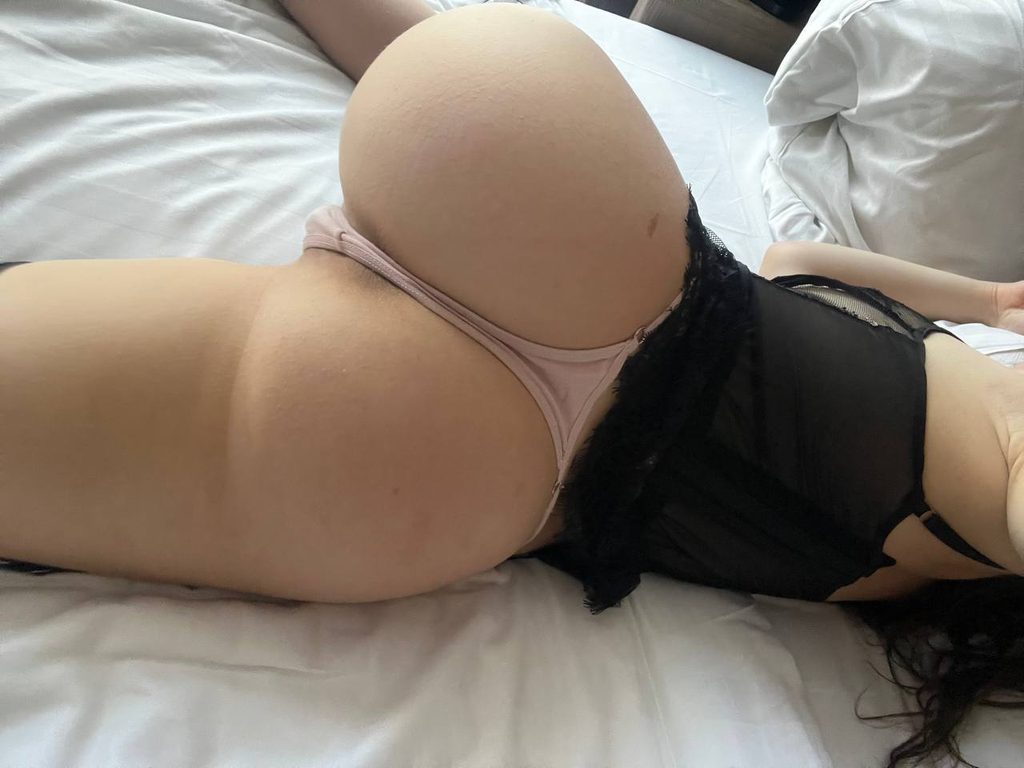
Layering creates its own set of visual, tactile, and auditory effects. Panties under pantyhose. Panties with stockings and garter belts. The combination of different materials creates textures and contrasts that neither garment alone could produce, and panty fetiishists find layering more interesting than any single element.
This is separate territory from the standalone pantyhose fetish covered in its own dedicated article. The two interests overlap frequently and can appear together in the same man, but neither requires the other, and who is attracted to one may not care about the other.
The wider world of lingerie fetishism
The panty fetish sits inside a broader lingerie fetishism that includes bras, corsets, garter belts, stockings, bodysuits, and slips.
For some fetishists, the complete outfit matters more than any individual garment. What compels their response is the full ensemble rather than the isolated panties. For others, the panties remain the central focus regardless of what else is being worn, and the surrounding lingerie is either accessory or irrelevant.
Both configurations are common inside the community, and the distinction between them shapes what a man is actually responding to during any given encounter. Someone with ensemble-focused attention and someone with garment-focused attention describe similar experiences in surface terms while responding to substantially different underlying stimuli.

Scent, memory and personal association
Smell has an unusually direct connection to memory and emotional response, and the panty fetish often includes scent-related dimensions for fetishists with olfactory attention.
Rachel Herz’s work on smell and desire, summarised in her book The Scent of Desire, documents how olfactory input connects to memory and emotional experience in ways that other sensory channels do not quite match. For panty fetishists, worn underwear carries associations that unworn underwear does not. The familiarity, the specific scent of a partner, the sensory record accumulated across a day, all of these can carry substantial erotic weight for adults with scent-focused attention.
Scent-based response is real, common enough to be documented across the fetish literature, and often central to how the panty fetish functions for a substantial part of men. The deeper question, of why an object becomes emotionally charged when it feels connected to a specific person, applies to scent-focused attention as clearly as it does to any other dimension of the fetish.

The panty as a personal object
Personal objects can carry substantial symbolic weight in intimate life, and panties are one of the categories where this dimension shows up most clearly.
A garment associated with a partner, a relationship, a particular memory, or a specific encounter can become significant far beyond its material value. Adults sometimes describe keeping a garment given by a partner, or exchanged during a specific moment, as carrying more meaning than most conventional keepsakes. The object serves as a kind of anchor for something the person wants to preserve access to.
This kind of personal-object attachment operates only within consent. A garment given, exchanged, or shared knowingly between partners is one thing. A garment taken without permission is theft, and no framing changes that. The article treats collecting and keeping as consensual practices between adults who have agreed to them, not as a category that includes taking things from people who have not consented.
Collecting, trophies and symbolic possession
Some fetishists collect panties as part of their broader interest, and the collecting can be organised around many different criteria: colour, material, style, era, personal association with particular partners or particular moments.
For fetishists who collect consensually, the garments function as keepsakes, symbols, memory triggers, or private objects connected to fantasies one has developed over time. The collecting is not typically about volume. It is about accumulating objects that carry meaning, and the meaning is often more important than any objective feature of the garments themselves.
Nothing about the panty fetish requires collecting. Many have no collecting dimension in their interest at all and respond entirely to panties in situ on partners. Collecting is a specialised subcategory that appears alongside the broader interest for a portion of the community rather than a defining feature of it.
Cross-dressing and gender expression
Some adults find wearing particular types of underwear personally or erotically significant, and this can overlap with cross-dressing, gender expression, and clothing-focused transformation experiences.
Wearing clothing associated with another gender does not indicate any particular gender identity or sexual orientation. Adults across the full range of gender identities and sexual orientations sometimes engage with clothing that is culturally coded outside their assigned category, and the reasons for doing so are as varied as the adults themselves. For some it is about erotic experience. For others it is about self-expression. For others it is about specific roleplay contexts. For others still it is part of ongoing identity work that has nothing to do with fetish attention at all.
The article uses current terminology and treats these interests as legitimate variations rather than pathologising them with outdated language. What matters at the level of psychology is that clothing can carry personal meaning that is not reducible to its cultural coding, and that people engaging with clothing across those codings are doing something that has been happening throughout recorded history.
Feminization and submission fantasies
A specific roleplay category involves typically men, but not exclusively, adopting feminine presentation as part of a consensual dominance and submission arrangement with a partner.
The psychological content typically involves transformation, submission, performance, and clothing as a symbol of an assigned role within the scene. Panties often function as a central item in this configuration because of their strong cultural coding and their direct physical intimacy.
Nothing about the article suggests that femininity itself is degrading. The consensual fantasy structure that some couples build around feminization is a specific negotiated dynamic rather than a statement about gender. The meaning is created by the participants and applies within the scene they have chosen to construct together. For people who find this territory compelling, the specifics are worked out between the partners involved based on what they both find satisfying.
Panties and power dynamics
Beyond feminization specifically, panties can become symbolic within broader power-exchange scenarios. A garment can represent a chosen role, a form of presentation, a particular control arrangement, or a private symbol between partners that carries meaning only they share.
Clothing does not create a power dynamic. The meaning is imported by the people involved. For couples where the dynamic is already established, panties can become part of the vocabulary through which the dynamic is expressed. Wearing them at a partner’s direction, choosing them together, being told which pair to wear on which day, or any number of other configurations all appear inside dominance and submission relationships that incorporate the panty fetish.
The specifics depend entirely on the couple. What functions as a meaningful symbol in one relationship might have no resonance in another. This is one of the reasons the fetish supports such wide internal variation.
Open-crotch and specialised lingerie
Open-crotch lingerie, sometimes called ouvert lingerie, is a specialised category with its own long history in intimate apparel design.
The central appeal is the visual and psychological contrast the garment sets up. The panties are present, styled, and often elaborate, while the traditional expectation of full coverage is altered by design. Fetishists respond to the subversion of the familiar garment, the framing effect the remaining fabric creates, the specialised aesthetic that ouvert lingerie has developed in its own right, and the contrast between concealment and openness that the design highlights.
This is a specialised category within lingerie design, and men are often responding to the design work itself as much as to any function the garment serves. Historical claims about ouvert lingerie in earlier fashion periods are sometimes exaggerated in popular writing. Where credible fashion-history sources support specific claims, they are worth citing directly. Where the claims are looser, the article treats them as folklore rather than history.
When the garment is designed for more than appearance
Modern intimate apparel includes a wider range of technology-integrated and specialised garments than most casual discussion acknowledges. Underwear designed to hold small wearable devices, remote-controlled configurations, harness-style intimate wear, chastity-related clothing, and various decorative accessories all sit inside this broader field.
For some, the appeal often runs on themes of secrecy, anticipation, control, and the specific psychology of wearing something functional beneath ordinary clothing. The garment carries a private significance that runs through the wearer’s day without being visible to others, and for a partner or dominant party involved in the arrangement, that hidden dimension is part of what makes the configuration compelling.
The article does not name specific products or provide operational instructions. This territory is documented in specialised communities and product literature that people interested in exploring it can find through appropriate channels.
Panties and chastity
Chastity-related fantasies overlap with the panty fetish in interesting ways for many fetishists, particularly within power-exchange arrangements.
The garment can function as part of a broader symbolic system involving restriction, denial, anticipation, control, and secrecy. Being required to wear a particular garment, being denied the choice of what to wear, or having the garment function as part of a broader chastity arrangement all appear inside couples with combined interests in this territory.
Chastity as a fantasy category involves many possible motivations, and the article does not reduce it to a single explanation. What can be said is that the panty fetish and chastity dynamics overlap frequently enough to be worth naming, and that for couples who combine them, the two interests reinforce each other in ways that neither alone would produce.
The wetness and condition dimension
Some fetishists respond specifically to the condition of a garment rather than to the garment in isolation.
This can include interests involving texture changes across a day of wear, dampness of various kinds, evidence of use, visual changes in fabric, and other transformations from an initial pristine state. The general pattern is that the condition of the garment carries as much erotic weight as its original state, and sometimes more.
This is a specialised overlap rather than a defining part of the panty fetish. Many men have no attention to garment condition at all. For those who do, the interest connects naturally to broader material and sensory fetishes covered elsewhere in the fetish literature.
Exhibitionism, voyeurism and the psychology of the reveal
The psychology of showing and being shown is one of the recurring dimensions of the panty fetish.
A partner glimpse, a deliberate reveal, a moment of controlled exposure between people who have agreed to that dynamic, all carry a specific psychological weight that fully undressed encounters do not quite match. The partial nature of the exposure is the point. Full nudity is a different category with its own psychology. A glimpse of underwear operates in a different register because concealment remains present alongside revelation.
The article discusses this territory only in consensual adult contexts. Covert observation, secret photography, upskirting, and any other non-consensual practices are not part of the discussion and are not framed as erotic in this piece. The clear line between consensual and non-consensual observation applies here as it does everywhere else in adult intimate life.
Everyday underwear versus fantasy lingerie
One of the more revealing internal contrasts inside the panty fetish is between liking glamorous fantasy lingerie and liking ordinary everyday underwear.
The fantasy end of the range involves elaborate lace, unusual cuts, dramatic colours, and highly styled configurations that read immediately as staged. The everyday end involves cotton, simple colours, familiar designs, and the domestic quality of clothing that belongs to a person’s actual daily life.
For fetishists oriented toward glamour, the staged quality is central to the appeal. The garment is doing performance work. For enthusiasts oriented toward the everyday, the familiar quality is exactly the point. The garment is real, personal, and unperformed, and that realness is what carries the response. Neither orientation is more legitimate than the other, and men with one often have limited interest in the other. This is one of the clearest examples of how the same fetish category can contain almost opposite preferences.
Vintage styles and historical fantasy
Vintage underwear styles have their own subcategory of fetishists who respond to older fashion periods as much as to any specific material or cut.
High-waisted briefs, vintage lingerie, girdles, bloomers, and specific fashion eras all appear in this territory. The appeal often connects the man not only to another person but to an imagined period. What compels the response is the whole cultural package of the era, and the garment functions as an entry point into that broader imagined world.
Nostalgia, glamour, formality, ritual, and fashion history all play into this dimension. For fetishists who like the vintage aesthetics, contemporary lingerie often carries less charge than authentic period-appropriate garments would. Not because contemporary lingerie is worse, but because the era itself is part of what the fetishist is responding to.
Why preferences can become so specific
Fetish preferences tend to become detailed over time, and the panty fetish illustrates this pattern as clearly as any other category.
A kinkster might not simply like panties. They might prefer a specific colour, a specific material, a specific cut, a specific era, a specific pattern, or a specific presentation context. The precision often surprises even himself, who may not have realised until asked how detailed their preferences had become.
Several factors likely contribute in different combinations for different people. Personal experience with particular configurations. Repeated visual exposure to specific imagery. Memory of specific encounters. Sensory preferences that developed early and stayed durable. Cultural imagery that emphasised particular styles during formative periods. Individual imagination working over years of attention. None of these provides a complete explanation for any given enthusiast’s specific preferences, and the article does not pretend the origins of individual fetishes are always knowable. Sometimes the honest answer is that we don’t know, and the interest is what it is.
Panties as a crossroads of other fetishes
The overlaps this article has covered add up to a picture in which the panty fetish sits at the intersection of many separate interests rather than defining a single narrow category.
Lingerie fetishism, pantyhose fetishism, stockings fetishism, general clothing fetishism, material fetishism, silk and satin fetishism, lace fetishism, scent fetishism, cross-dressing, gender expression, BDSM, dominance and submission, feminization roleplay, chastity, exhibitionism, consensual voyeurism, vintage fashion fetishism, and body worship all connect to the panty fetish in some configurations for some people.
No individual engages with all of these. What holds the category together is the garment itself and the range of sensory, symbolic, and personal content it can carry. What separates one fetishist’s version from another is which elements matter to them and how strongly.
Why such a small garment can carry so much meaning
Panties are not just an item of clothing. For panty fetishists, they represent a combination of privacy, intimacy, fabric, texture, visual presentation, personal identity, memory, and anticipation that few other garments assemble in a single object.
For one fetishist the response is about lace. For another, ordinary cotton. For another, colour, scent, vintage design, or the role the garment plays in a larger fantasy involving worship, control, transformation, or ordinary domestic intimacy. The object itself does not explain the response. The meaning, memory, sensation, and imagination attached to it do.
What ordinary clothing becomes, once a person starts attaching that kind of meaning to it, is something more than fabric. The panty fetish is one of the older and more widely documented clothing fetishes for exactly this reason. A small garment, quietly worn under everything else, has been carrying the weight of adult imagination for a long time, and the interest shows no sign of quieting down.
Sources
- Scorolli, C., Ghirlanda, S., Enquist, M., Zattoni, S., & Jannini, E. A. (2007). Relative prevalence of different fetishes. International Journal of Impotence Research, 19(4), 432-437. https://pubmed.ncbi.nlm.nih.gov/17304160/
- Joyal, C. C., & Carpentier, J. (2017). The prevalence of paraphilic interests and behaviors in the general population. Journal of Sex Research, 54(2), 161-171. https://pubmed.ncbi.nlm.nih.gov/26241201/
- Steele, V. (1996). Fetish: Fashion, Sex and Power. Oxford University Press.
- Bering, J. (2013). Perv: The Sexual Deviant in All of Us. Farrar, Straus and Giroux.
- Herz, R. (2007). The Scent of Desire: Discovering Our Enigmatic Sense of Smell. William Morrow.
- Wismeijer, A. A. J., & van Assen, M. A. L. M. (2013). Psychological characteristics of BDSM practitioners. Journal of Sexual Medicine, 10(8), 1943-1952. https://onlinelibrary.wiley.com/doi/10.1111/jsm.12192
- Featured image: www.pornpics.com/