
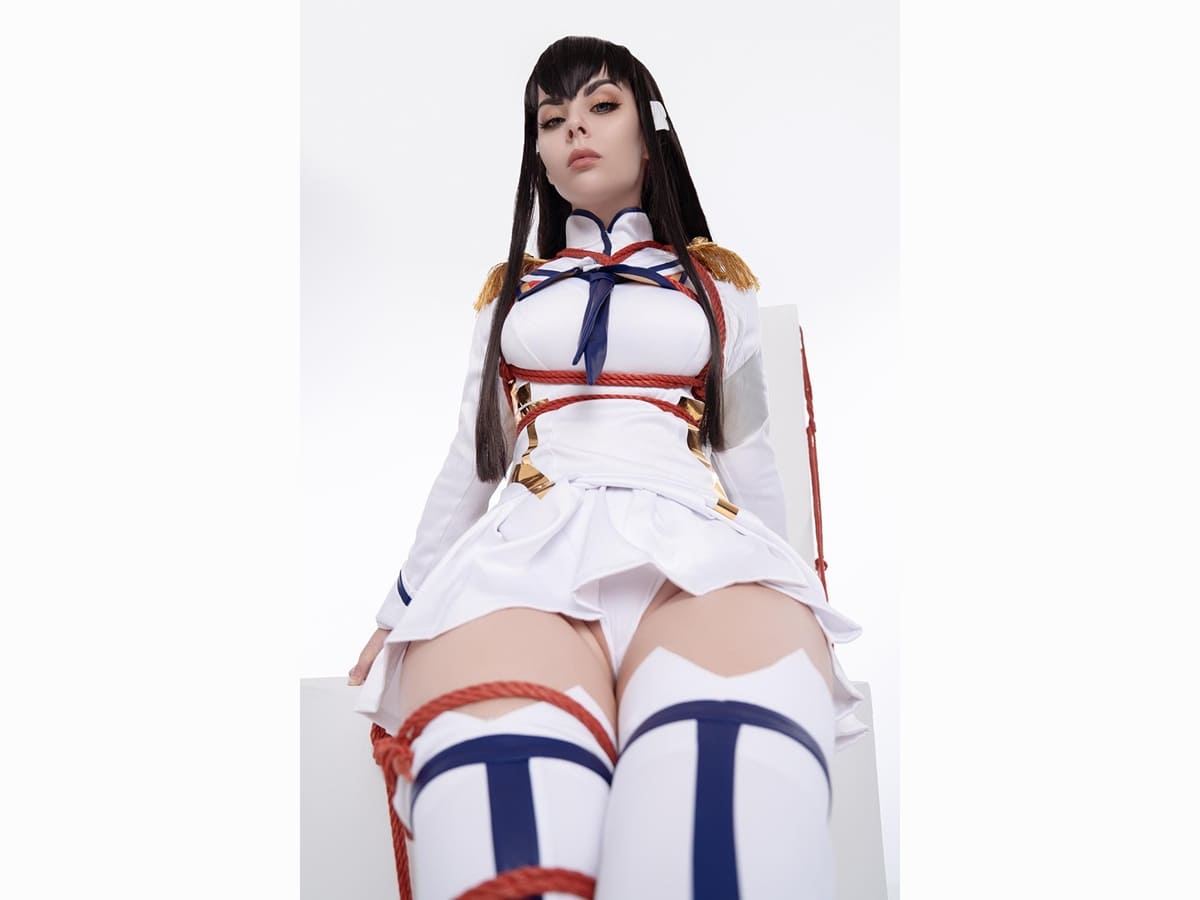
The term “pornstar experience” gets thrown around in ways that mostly reduce it to mechanics pornography depicts. That’s the least interesting reading of the concept. What long-term couples actually mean when they use the term is something more ambitious. A temporary shift in how both partners present themselves and interact with each other, drawing on the vocabulary of theatrical glamour rather than on any particular physical practice.
The concept is about play. Playing at being someone glamorous. Playing at being watched even when nobody’s watching. Playing at inhabiting a version of yourself who’s more theatrical, more confident, more openly interested in performance than your ordinary daytime self usually is. The practice is closer to theatre than to pornography, and understanding it that way makes it accessible to couples who’d otherwise assume the term wasn’t for them.
Sloane Square, taken as a setting, is unusually well-suited to this kind of theatrical play. The neighbourhood runs on self-presentation. Peter Jones anchors the commercial corner. King’s Road extends westward. The Duke of York Square provides a pedestrianised zone where dressing well doesn’t attract attention because that’s what everyone here is doing anyway. Sloane Street runs north into Knightsbridge with its density of fashion. The Royal Court Theatre puts dramatic performance right in the centre of the square. The whole neighbourhood is a stage set for people who’ve decided to present themselves deliberately.
The principle of playing a part
Roleplay sex is often described as theatrical, but most couples don’t quite treat it that way in practice. They treat it as character work. Inhabit a character, use vocabulary, follow a script. The more theatrical version is different. It’s less about characters and more about atmospheric presentation. You don’t have to be anyone specific. You just have to be more.
More considered in what you’re wearing. More attentive to how you’re being seen. More willing to inhabit gestures and behaviours that ordinary self-presentation edits out. The pornstar experience, in this reading, is less about sexual practices and more about glamorous presentation extended across a whole day and evening.
For couples for whom this kind of play appeals, the challenge is finding settings that support the presentation. Most of London tells you to dress down. Sloane Square is one of the exceptions. Dressing up here is what the neighbourhood wears itself.
Want to live out a fantasy? Call us and book a roleplay escort for tonight! Make sure you tell us your expectations, you don’t want to meet a dominatrix with a strap-on dildo instead of a submissive french maid!
The choice of outfits
For a date organised around this theatrical register, the outfits both partners choose matter more than they do for most dates.
Not costumes. Not literal recreations of performance clothing. Considered outfits that both partners have chosen to look good in, chosen partly for how they’ll look together, chosen with attention to the way both of you want to be seen. Something you’d both want photographs in. Something that would look right at an art opening or a restaurant with a dress code.
For many couples, the act of dressing up together at home before the date starts is already part of the practice. The attention paid to choices. The comments both partners make about the outfits. The shared awareness that today is being deliberately theatrical rather than deliberately casual. All of this is already the performance beginning.
For same-sex couples, mixed couples, or couples of any configuration, the principle is the same. The glamour is negotiated between the two of you. It doesn’t have to match any external template.
Where to go
The Saatchi Gallery in the Duke of York Square is one of the starting points that suits this kind of date. Contemporary art, often provocative, often theatrical. Free admission for many exhibitions. The atmosphere of a serious gallery treats dressed-up visitors as ordinary rather than unusual, which is exactly what the date benefits from.
King’s Road runs west from the square for miles. Shops, cafés, galleries. Walking it slowly, dressed with intention, produces the atmospheric experience of being seen without needing to explicitly perform for anyone. The neighbourhood absorbs glamour without commenting on it.
The mews streets off King’s Road, Bywater Street and various others, provide photogenic backgrounds for the photographs both partners might want to take of each other. Not tourist selfies. Considered portraits. Both partners deliberately looking good, deliberately posed, deliberately photographed.
The Royal Court Theatre on Sloane Square itself often has evening productions worth building the date around. Alternatively, the bar at the theatre is atmospheric on non-performance evenings and provides a pre-dinner drink location that suits the theatrical register of the day.
Photographs as part of the practice
For couples engaged in this kind of theatrical fantasy, taking photographs of each other is often central to what makes the practice satisfying.
Not documentation for social media. Portraits. The act of one partner deliberately photographing the other in the setting, with attention to how they’re looking, with direction about poses if that’s the configuration both partners prefer. The photographs become part of the accumulated shared history of the practice.
Sloane Square provides good conditions for this. The light. The architecture. The willingness of the neighbourhood to be photographed. Nothing about a couple taking portraits of each other on the streets attracts attention here, because a lot of the people in the neighbourhood are being photographed for one reason or another most of the time.
The psychology of exhibitionism-as-fantasy
Fantasies about being seen, admired, or observed carry psychological weight for many adults, even when the practice never involves actual public exposure. Research on sexual fantasy, particularly work by Christian Joyal published in the Journal of Sex Research, has documented that exhibitionistic themes appear across a wide range of adult fantasy content without necessarily corresponding to desire for public behaviour.
The mechanism is essentially the pleasure of imagined visibility. Being seen, in the fantasy, by an imagined audience whose attention makes the imagined self feel compelling. The practice of dressing deliberately for a date organised around this fantasy is a safe rehearsal of the psychology. The date doesn’t require any actual public exposure. The atmosphere of imagined visibility is what produces the effect.
For couples engaged in this practice, the value isn’t external attention. It’s the shared awareness between the two of them that they’re playing at being watched. The private conspiracy of theatrical presentation is what generates the pleasure. Everyone else in the restaurant just sees a well-dressed couple. Only the two of them know they’re doing something theatrical about it.
Restaurants and bars that suit the register
Sloane Square and the surrounding streets have restaurants and bars that support the theatrical register of the day.
Colbert on the square itself is designed to feel like a Parisian café that never existed but should have. The atmosphere, the decor, the pace of service all support theatrical presentation. Reservations are worth having on weekends.
Chelsea further west has atmospheric options ranging from casual to formal. Restaurants along King’s Road and the side streets provide dining options that treat well-dressed guests as expected rather than exceptional.
The advantage of the neighbourhood is that essentially any decent restaurant will work for this date. The atmospheric baseline is high enough that even relatively casual spots will treat the occasion appropriately. Choose based on mood and interest rather than needing to hunt for atmospheric venues.
The psychology of temporary transformation
Roleplay and fantasy practices carry a psychological function that’s worth being explicit about. The pleasure of temporarily inhabiting a different version of yourself. The relief of not needing to perform your ordinary self for an evening. The play of a different presentation being tried on for bounded time.
Research on adult play, including work by Aune and Wong published in Personal Relationships, has found consistent evidence that playful practices support long-term relationship satisfaction. The mechanism is partly the novelty and partly the mutual investment in shared imaginary spaces. Couples who play together, in the broad sense of the term, tend to stay engaged with each other longer than couples who don’t.
Theatrical fantasy days are one form this play can take. Not the only form. Not the right form for every couple. But for couples who find theatrical presentation compelling, this form of play produces satisfactions that ordinary date nights can’t quite match.
Escapism as legitimate practice
One point worth making explicitly: escapism gets treated as a weakness in a lot of contemporary discourse. Sometimes it is. Often it isn’t. Sometimes escapism into a temporary role is exactly the relief an adult life needs.
For couples with demanding working lives, caregiving responsibilities, ongoing stresses of ordinary existence, a date organised around theatrical fantasy can be one of the reliable practices that reset both partners’ relationship to each other. The escape into glamorous presentation for a bounded evening isn’t denial of ordinary life. It’s a complement to it. A practice that produces psychological refreshment ordinary evenings can’t reach.
Sloane Square supports this escapism well precisely because the neighbourhood doesn’t take itself entirely seriously. The glamour is real. The self-awareness of the glamour is also real. Both partners can inhabit the theatrical register without feeling they’re being asked to sincerely believe in it as anything other than the play they’ve chosen to enact together.
Practical shape
Meeting at Sloane Square around 2pm, both partners already dressed with attention. Afternoon at the Saatchi Gallery or browsing along King’s Road. Coffee break at an atmospheric café. Continued walking, potentially including photographs at atmospheric backgrounds. Cocktails at a bar as the light shifts. Dinner at a restaurant chosen for atmosphere. Home late, or continued at an atmospheric hotel bar if both partners want to extend the evening further.
Sloane Square tube (District, Circle lines) is central. Nothing about the day requires transport beyond taxis home. Weekends work well for the atmospheric density. Midweek evenings can be quieter but slightly less theatrical.
The day is longer than most. Six to eight hours from start to end, potentially more. The length is part of what makes the theatrical practice satisfying. The accumulated hours of the inhabited presentation is what produces the effect the day is built around.
What the day accomplishes
Underneath the outfits, the gallery, the dinner, what a Sloane Square day of this kind actually accomplishes is an opportunity for two partners to spend a whole day playing at being theatrically more than their ordinary selves. The practice is fundamentally about play.
For couples who share the taste for theatrical fantasy, the day is a reliable pleasure. Whatever happens later at the end of the evening is one movement in the longer composition the day has been. Neither partner needs to shift into character. The characters have been the characters all afternoon. Whatever final movement both partners have in mind arrives as culmination of the day rather than as a disconnected additional practice.
Which is the value the theatrical framing provides. The whole day is already the practice. Everything else is extension.
REFERENCES / SOURCES
- Joyal, C. C., Cossette, A., & Lapierre, V. (2015). What exactly is an unusual sexual fantasy? Journal of Sexual Medicine, 12(2), 328–340.
- Aune, K. S., & Wong, N. C. H. (2002). Antecedents and consequences of adult play in romantic relationships. Personal Relationships, 9(3), 279–286.
- Saatchi Gallery. https://www.saatchigallery.com/
- Royal Court Theatre. https://royalcourttheatre.com/
- Featured image: Xgroovy.com.