
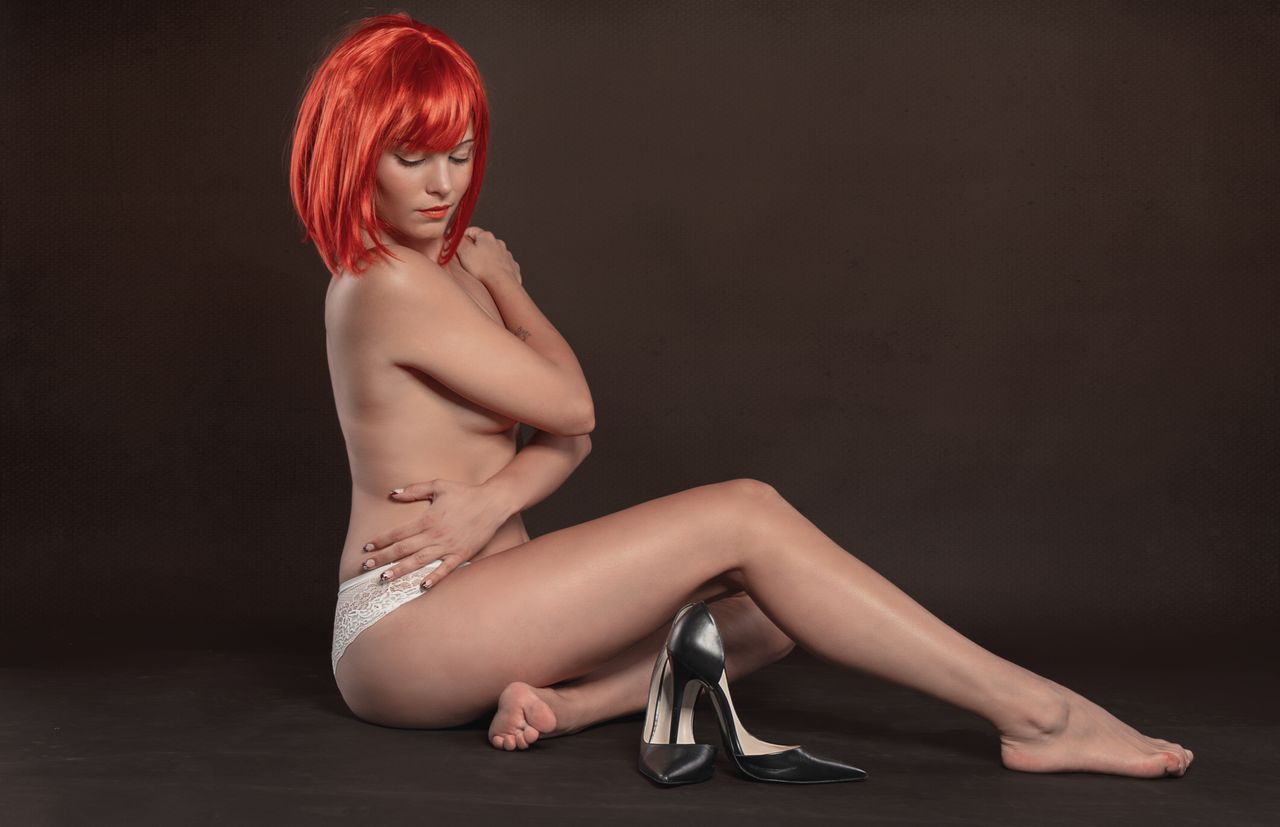
Ask anyone who’s spent time in the UK kink scene what people are quietly into, and feet will come up first nearly every time. There’s a proper name for fetishes that lock onto one bit of the body instead of the whole package: partialism. Feet, hands, hair, lips, the lot. Most of us have a soft spot for one body part or another, even if we’d never reach for the word fetish to describe it. The smaller crowd, the ones who build their whole desire around a single feature, are the people who end up in studies.
Speaking of which, those studies are a bit thin on the ground. The most-cited one (Scorolli and colleagues, published in the International Journal of Impotence Research in 2007) looked at 381 online discussion groups and around 5,000 participants. UK-side, the closest thing to a national snapshot is Channel 4’s Great British Sex Survey, run by YouGov in 2015 with 2,073 adults. That’s basically your lot. Nobody has bothered to update the rankings since, so take what follows with a pinch of salt.
What these numbers really measure
The easy assumption is that foot fetishes dominate because most people with a partialism happen to be into feet. Maybe. The other reading is that foot communities organised online earlier, formed more dedicated groups, and produced more measurable signal. So what gets counted is community visibility. The actual breakdown of preferences in the wider population could look quite different.
Other partialisms get squeezed by two forces. Some, like breasts or buttocks, are so culturally normalised that nobody bothers calling them a fetish. Others, like hands or lips, sit close to ordinary attraction, so fewer people form distinct communities around them. With that caveat up front, here’s how the top five shake out in the data we have.
Feet (podophilia)
The runaway leader. In the Scorolli study, 47% of body-part fetish groups online focused on feet. UK media frequently cite a YouGov-derived figure of around 13% of British adults reporting some level of foot fetish, roughly 1.5 million people. Coverage of Channel 4’s survey kept feet inside the top ten national fetishes year after year.
The appeal varies wildly between people. Some are drawn to the shape itself. Others to footwear. A fair few are into the trust dynamic of being intimate with a body part usually kept covered.
Hair (trichophilia)
Hair pulled around 7% of body-part fetish groups in the Scorolli numbers. The UK trichophilia scene tends to revolve around long hair and particular colours, plus the rituals that go with both. Brushing and washing mostly, sometimes cutting. London salons crop up in interviews with hair fetishists more often than you’d think, mostly because a wash by a stranger is one of the few public settings where the sensation is properly available without anyone batting an eyelid.
A lot of trichophilia bleeds into ordinary sensory attraction. The texture is half of it. The way hair moves and smells does the rest. It doesn’t fit neatly anywhere clinical, which is part of why it scores lower in surveys than it really should.
Body size and physique
Bigger bodies and very lean ones both come up around 9% of the time in Scorolli’s data. The UK scene splits into two camps. Feederism and fat admiration sit on one side, with their own dating apps and meetup circles. On the other, the people drawn specifically to athletic or unusually slim frames. Surveys rarely catch either group cleanly. Stigma is part of it. The bigger issue is that body-type preference shades into ordinary attraction so smoothly that participants don’t always tick the “fetish” box.
The Wikipedia entry on sexual fetishism flags body size as one of the more clinically studied partialisms, but the UK-specific numbers stay thin on the ground.
Muscles (sthenolagnia)
Around 5% in Scorolli’s count. Muscle worship has a sturdy subculture in the UK, plugged into gym culture and bodybuilding circles. A handful of London personal trainers offer muscle-worship sessions as a sideline. The practice has been around long enough to turn up in the odd lifestyle feature over the past decade.
What’s the draw? Usually a mix of aesthetic admiration and a power dynamic. The person being worshipped is by definition the stronger one in the room, which is partly why muscle worship slots so neatly into the wider femdom and findom communities where a lot of practitioners already socialise.
Hands
Hands didn’t make Scorolli’s clean percentage breakdown, but they appear consistently in clinical literature and in UK community conversation as one of the more common partialisms after feet and hair. Hand-focused attraction usually centres on size and vein definition. The way someone uses them, gesturing, holding a pen, working with tools, comes up almost as often.
The crossover with general attraction is huge, which is part of why hands are tricky to pin down statistically. Plenty of people who’d never call themselves hand fetishists will mention a partner’s hands as the first thing they noticed. For more on partialism as a clinical category, the Healthline overview is a decent starting point.
A last note on the data
None of this proves feet are objectively the sexiest body part in British eyes. The people who are deeply into feet have simply organised better online and produced more data than other groups. The real top five in any given household, or any given Friday night, might look completely different. Most people, when pressed, are into more than one thing.
If a partialism comes up in a relationship as part of the conversation, treat it as useful information about what works for the two people involved. Not a number on a chart.
Sources: