
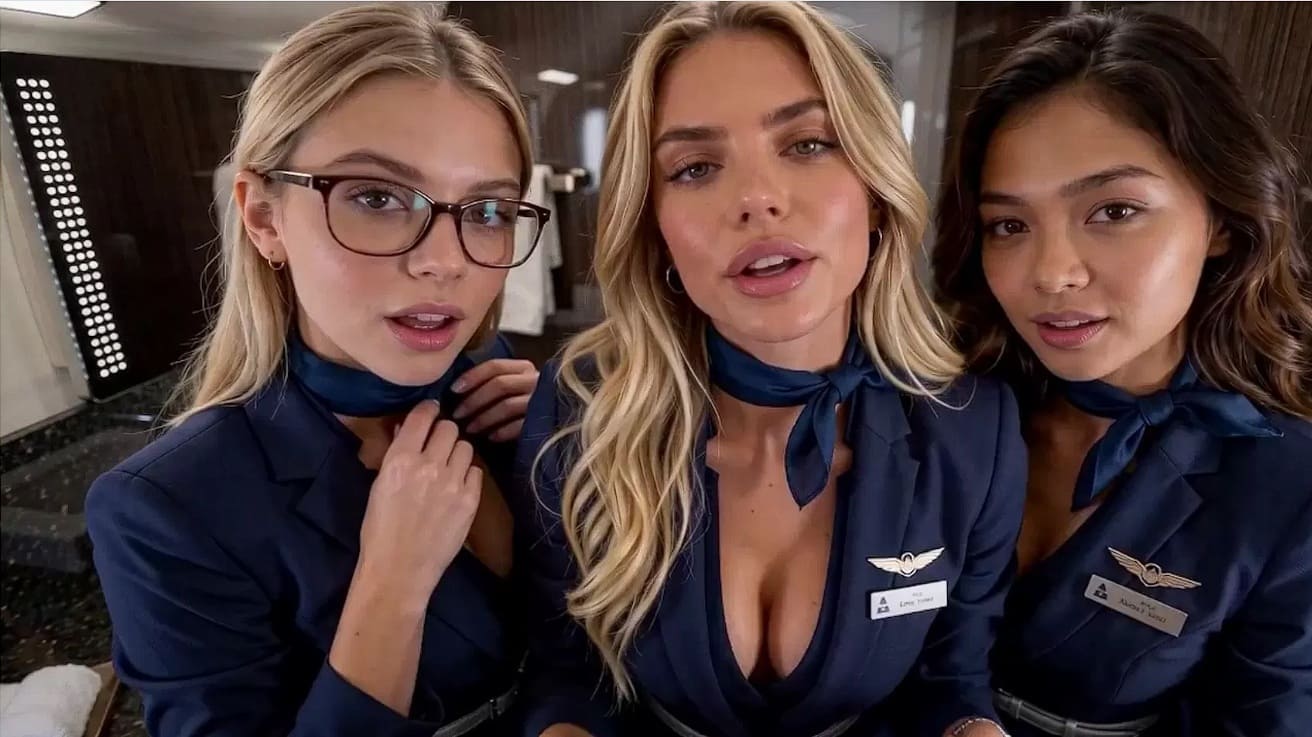
A uniform isn’t clothing. It’s a social script rendered in fabric. When someone wears a specific uniform, they aren’t just dressed a particular way – they’re announcing who they’re supposed to be, what they’re allowed to do, and how everyone else in the room is supposed to respond. That announcement carries enormous psychological weight, and the way it operates below conscious awareness is exactly what makes uniforms function so powerfully as fetish material.
Understanding the uniform fetish requires taking the authority-signal function seriously rather than treating the outfit as just another aesthetic. The clothing is doing specific work, and the work is what practitioners are responding to.
The nervous system reads uniforms fast
Human perception has specific shortcuts for identifying social roles. Faces, gaits, tones of voice, and – critically – clothing. A person in a specific uniform gets processed as belonging to a specific category, with specific expected behaviours, in under a second. This is largely automatic; it doesn’t require conscious thought.
The categories carry expectations. A person in a police uniform is expected to have authority to give certain orders. A person in a medical uniform is expected to have access to certain kinds of intimate contact. A person in a military uniform is expected to command specific respect. These expectations exist regardless of whether the person is actually the professional the uniform signals.
Fetish practice takes this automatic processing and turns it into content. The uniform triggers the expectation. The scenario plays on it. The mind fills in the roles, hierarchies, and dynamics that the outfit implies, without needing them spelled out.
This is why uniform-based scenes tend to move quickly. The setup work most other scenes need – establishing who’s in charge, what the frame is, what the expected behaviours are – happens automatically as soon as the uniforms are on.
The main categories and what they trigger
Different uniforms carry different specific weights. The ones that show up most often in scene contexts trigger distinctive psychological territories.
Military. Command structure, discipline, hierarchy, the physical demands of service. Uniforms often emphasise a specific tightness, formality, and visible rank. The associated scenarios tend to involve orders, obedience, and the specific relationship between commanding and following.
Police-inspired. Authority to compel, to arrest, to enter, to search. The specific dynamics tend to involve interrogation, submission, and the loss-of-agency that being handled by law enforcement implies. The distinction from actual impersonation matters legally and ethically.
Medical. Intimate access, examination, clinical procedure. The dynamic runs on the specific vulnerability of being examined by someone in authority who has professional permission to touch you. Doctor-patient, nurse-patient, and their variations.
Formal workwear. Executive dress, business formal, specific professional attire. The dynamics tend to involve workplace hierarchy, the specific power differential between supervisor and reporting employee, and scenarios structured around office life. Less about specific procedure, more about status and access.
School-inspired. For adults playing adult characters. The specific dynamics involve the teacher-student differential, discipline, testing, and structured evaluation. Requires particular care to keep the framing on adult participants only.
Each category has its own conventions, its own community, and its own specific concerns about how it should and shouldn’t be practiced. The specific uniform matters – not just as clothing, but as the specific script it invokes.
Symbolic role-play versus real-world impersonation
The most important line to draw is between fetish practice and actual professional impersonation.
Wearing a uniform-style outfit privately, for scene purposes, with a partner who has consented to the frame – this is symbolic role-play. It uses the visual signals to invoke a fantasy dynamic in a bounded setting.
Wearing an actual military, police, or medical uniform in public, in a way that could be mistaken for real authority – this is impersonation. It’s illegal in many jurisdictions for specific uniforms (police impersonation is a serious offence), it damages the reputation of the actual professions, and it has no place in ethical fetish practice.
The distinction matters both practically and ethically. Fetish uniforms are typically designed for the scene – designed to invoke without being actual duplicates of real service uniforms. Legitimate specialist retailers understand this line. Practitioners with any sense understand it too.
If your scenario requires you to actually pass as a specific professional in a public setting, you’ve crossed from scene practice into a different category entirely. The specific frisson of impersonation is not worth the actual legal and ethical exposure.
How uniforms create instant character and hierarchy
The specific magic of uniform play is how much work the clothing does automatically.
Without a uniform, establishing a specific character requires backstory, dialogue, and mutual agreement about who’s playing what. Two people in an empty room have to negotiate the whole frame. With uniforms, the frame arrives already established. The person in the officer’s uniform is the officer. The person in the recruit’s outfit is the recruit. The relative status is set before anyone speaks.
This produces a specific efficiency in scene construction. Complex power dynamics that would take significant negotiation in an abstract frame become immediately available in a uniform frame. The role hierarchy is visible; both parties are working from the same script; the scene can begin without extensive setup.
The efficiency comes with a specific requirement: both parties actually need to know the script. Uniform play works best when the associated dynamics – the specific etiquette of military rank, the specific procedures of medical examination, the specific dynamics of executive workplace – are understood by both parties well enough to inhabit. When one person is working from an unclear or Hollywood-derived version of the script, the scene tends to feel off.
Attraction to the garment versus attraction to the role
Practitioners split on this axis, and the split matters for how they experience the practice.
Garment-oriented. The specific attraction is to the physical clothing itself – the cut, the fabric, the specific pieces of uniform, the way it fits and feels. The role scenario is secondary; the clothing is the object of desire.
Role-oriented. The specific attraction is to the fantasy dynamic – the authority, the vulnerability, the specific power exchange the uniform implies. The clothing is a means to invoke the role, but the role is what the person is responding to.
Both are legitimate configurations, and many practitioners hold both threads. A garment-focused practitioner may still care about the role frame; a role-focused practitioner may still appreciate specific uniform quality. But the emphasis differs.
Understanding one’s own emphasis helps with what to invest in. Garment-focused practitioners tend to build collections of specific pieces they love. Role-focused practitioners tend to prioritise finding partners who can inhabit the associated roles well. Both approaches produce satisfying practice; they’re just different practices.
How clothing changes behaviour
An underappreciated element of uniform play is how the clothing affects the wearer’s own behaviour.
Wearing a specific uniform tends to shift posture. Military-style uniforms produce more upright bearing. Formal business dress produces more measured movement. The specific cut and weight of the clothing physically shape how the body moves.
Speech shifts too. Wearing a uniform associated with authority tends to produce a more deliberate speech register – slower, more declarative, less casual. The wearer is inhabiting a role, and the role has a specific vocal register attached to it.
Attention shifts as well. Wearing the uniform of a specific role primes the wearer to think in terms of that role’s concerns and vocabulary. Someone playing a specific character in a specific uniform will find their thinking drift into the frame that character occupies, in ways that ordinary clothing doesn’t produce.
None of these effects are large in isolation. Combined, they produce a genuine behavioural shift that reinforces the role for both wearer and partner. This is one reason committed uniform play tends to feel more immersive than casual costume – the outfit is actually working on the person wearing it.
Practical care around real professions
The strongest ethical line in uniform play is respect for the actual professions being invoked.
Military uniforms carry weight for the people who actually wore them in service. Police uniforms represent an institution whose real-world impact on specific communities is contested and consequential. Medical uniforms represent professionals whose real work involves intimate access to vulnerable people. Playing with these visual codes for private scene purposes is legitimate; treating them without acknowledgment of what they mean outside the bedroom is not.
Practical implications: keep the play private. Don’t publish photographs that could be mistaken for actual documentation of the professions. Don’t wear specific insignia or rank markings you haven’t earned. Don’t play in ways that would cause harm to actual members of those professions if they saw it.
Serious practitioners understand these lines. Casual ones sometimes don’t, and produce content that reflects poorly on the whole community.
Uniforms work as fetish material because they carry more social meaning per square inch than almost any other clothing. They tell everyone in the room who someone is supposed to be, and that instant establishment of role is exactly what many kink dynamics need to function.
The specific power is in the automatic processing. The uniform triggers the expectation. The expectation invokes the role. The role generates the dynamic. All of this happens faster than conscious thought, and it happens whether or not the wearer intends any of it. In a scene context, this efficiency is exactly the point.
Uniform play, at its best, uses that efficiency deliberately and ethically – keeping the play bounded, respecting the actual professions being invoked, and drawing on the material’s specific psychological power without confusing it with real-world authority. Done that way, few other fetish materials can match what a well-chosen uniform accomplishes with a partner who understands the script.
Sources:
- Bickman, L. (1974). The social power of a uniform. Journal of Applied Social Psychology, 4(1), 47–61. – the classic study on how uniforms produce compliance and authority perception.
- Joseph, N., & Alex, N. (1972). The uniform: A sociological perspective. American Journal of Sociology, 77(4), 719–730. – foundational sociology on the function of uniforms in social hierarchies.
- Wismeijer, A. A. J., & van Assen, M. A. L. M. (2013). Psychological characteristics of BDSM practitioners. Journal of Sexual Medicine, 10(8), 1943–1952.
- Steele, V. (1996). Fetish: Fashion, Sex and Power. Oxford University Press. – cultural history including uniform-based fetish practices.