

Candles are sold on the promise of atmosphere. Warm light, soft shadows, a scent described on the packaging as something like “driftwood and quiet confidence”. The marketing assumes you will put it on a shelf and feel calm.
Some of us have considerably more ambitious plans for the atmosphere than the shelf.
Temperature play, and where wax fits
The temperature play fetish covers any erotic use of heat and cold – ice, warmed oil, chilled metal, a cooling breath against damp skin. The common thread is that temperature bypasses the reasoning part of the brain entirely. You cannot decide to be unbothered by the cold. The body reacts before you are consulted, and that involuntary quality is a great deal of the appeal.
Wax play is the most theatrical member of the family. A candle is tipped, wax falls, it lands warm and sets within seconds, and the person underneath experiences a sharp bright moment followed by a slow cooling and a strange residual weight on the skin.
Why people love it
Anticipation. This is the engine. The candle is visible. The angle is visible. The pause before the pour is visible. Blindfolded, it is worse – better – because the only information available is the sound.
Contrast. Warm against cool skin, a single point of intense sensation against stillness everywhere else. The nervous system is extremely attentive to contrast and relatively bored by uniformity.
Ritual. Wax play is slow. There is setup, there is arrangement, there is a deliberate pace that rushing destroys. For a lot of people the ceremony matters more than any individual drop.
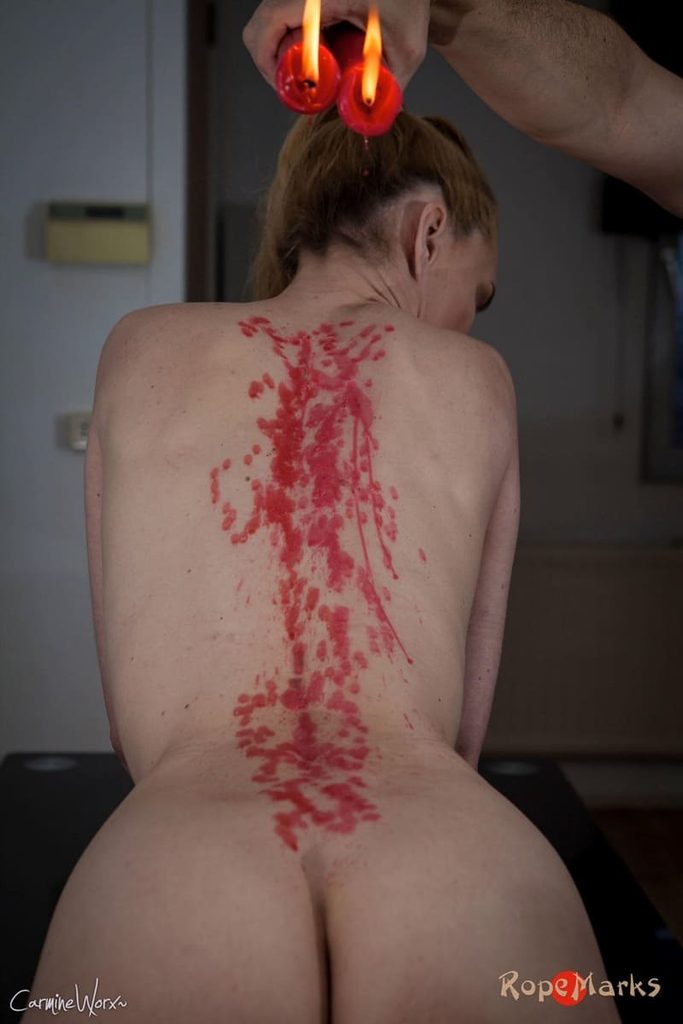
Trust without pain. This is the part worth emphasising. Wax play is frequently assumed to be a pain activity and for many practitioners it simply isn’t. Done at modest temperature it registers as warm and startling rather than painful. What it reliably involves is vulnerability: lying still while someone applies something you cannot see coming. That is where the intimacy comes from, and it is available without hurting anyone at all.
The thing you need to understand about wax
Not all wax is the same, and ordinary household candles are not suitable, as they melt at a higher temperature. This is the single most common beginner mistake.
Different waxes melt at substantially different temperatures. Products manufactured and tested specifically for body wax play are formulated to melt at the lower end and are sold with instructions about use on skin. A scented candle from a homeware shop was formulated to burn attractively on a table, and may melt considerably hotter. Beeswax tends to run hot. Additives change things too – many fragrances, dyes and hardeners raise the melting point or introduce skin irritants.
Candle wax can cause burns. Real ones, requiring real treatment. Not all categories of wax are automatically safe, including those sold for the purpose, because temperature depends on the product, how far it falls, how much it lands at once, where it lands and how long it sits. What we can say is to buy a product intended for this, read its instructions, and follow them rather than advice from a stranger on the internet, including us.

Safety, practically
Test on yourself first. The inside of your own forearm, from the height you intend to use, before anything touches your partner. Every session, with every new product. This is non-negotiable and takes thirty seconds.
Height changes temperature. Wax cools as it falls. A greater drop means cooler wax. This is a real effect and useful – but it is not a precise dial, and I am not going to give you a number in centimetres and call it safe. Test, adjust, test again.
Keep away from the face entirely. No wax near the eyes, ears, nose or mouth. Burns there are serious and the eyes in particular are unforgiving. The same goes for genitals and any other delicate tissue.
Avoid broken skin, rashes, moles, tattoos that are healing, and any area with reduced sensation. Numb skin cannot report a burn, which removes your only real-time warning system. This is also why wax play and anaesthetic substances – including a significant quantity of alcohol – are a bad combination.

Check for allergies and skin conditions beforehand. Eczema, psoriasis, fragrance sensitivities. A patch test on a small area a day ahead is sensible for a new product.
Treat it as a fire. Because it is one. Clear the area of anything flammable. Tie hair back and keep it well away. Synthetic fabrics and bedding are a hazard. Have a damp towel within reach. Never leave a lit candle unattended, including during the interesting parts.
Hair makes removal painful. Wax grips hair exactly as well as it does in a salon, for exactly the same reason. A thin layer of a suitable body oil applied beforehand makes removal dramatically easier and is standard practice.
Agree a stop signal before you light anything, and agree what you will both do if something goes wrong – where the water is, where the first aid kit is.
If something does go wrong: stop immediately, cool the area with cool running water for twenty minutes, and do not pick at wax stuck to a burn. Anything blistering, larger than a small 5 Pence coin, on the face, hands or genitals, or simply worrying, needs proper medical assessment. There is no version of this where “see if it settles down” is the right call on a burn.
Of course, the safest option is to book a fetish escort that offers wax play – she will have the right products.
Keeping the right frame
The reason we have given safety more room than seduction here is not that wax play is especially dangerous relative to other kinks. It is unusually easy to do carelessly – candles are in everyone’s house, the activity looks simple, and the failure mode is a genuine injury rather than an awkward evening.
Done properly it is one of the most absorbing things in the sensory repertoire: slow, visual, oddly meditative, and far gentler than its reputation suggests. Done carelessly with a scented candle somebody got for Christmas, it is a burn and a difficult conversation.
Creating a memorable atmosphere is one thing. Having to explain an entirely preventable burn to a practice nurse on a Sunday morning is quite another.